A shopper has found the pair for an upcoming occasion and follows your urgent advert to the product page. Several useful sizes are unavailable, and the delivery service is unclear. You've recognised the event, but left the practical purchase unfinished.
Seasonal planning needs to connect the customer's timing with your operation. A launch date and a seasonal background on an old asset won't do that alone. Give the campaign an identifiable model, reliable information and a current account of what you can fulfil. Urgency only makes the gaps more awkward when those pieces don't agree.
Find the buying task behind the season
Choose a recognisable situation, using actual customer questions where available. Comparing formal styles isn't the same task as replacing a known pair. A season can give both purchases context without making their information needs identical. Plan for the decision rather than just the date.
Don't assume a shared event, dress code or preference across every customer. An illustrative styling scene can explain appearance without becoming a universal recommendation. Keep fit and comfort claims within the evidence for the actual model. The occasion doesn't supply evidence you didn't already have.
Give each asset a clear role. One could introduce a silhouette, another explain a finish and another help someone recognise a familiar model. Those are useful distinctions for production. Repeating “the collection is ready for the season” in several settings doesn't explain which buying question each version answers.
Select the models using current size coverage
Inspect purchasable sizes for the proposed pairs. A general “in stock” flag isn't enough if the principal model offers little useful choice. The campaign needs an offer the arriving customer can assess, not simply a stock status that remains technically true.
Ask the stock owner which changes are confirmed and which remain uncertain. Expected supply shouldn't become an advertising promise before the business can support it. Separate products ready now from those requiring another decision. That gives the launch plan a factual starting point.
Prepare credible alternatives where available, with their own product facts and sizing references. Keep differences visible. Similar looks don't establish identical fit or automatic suitability for the same person. An alternative earns its place by remaining understandable and purchasable on its own terms.
Separate researching from needing the shoes soon
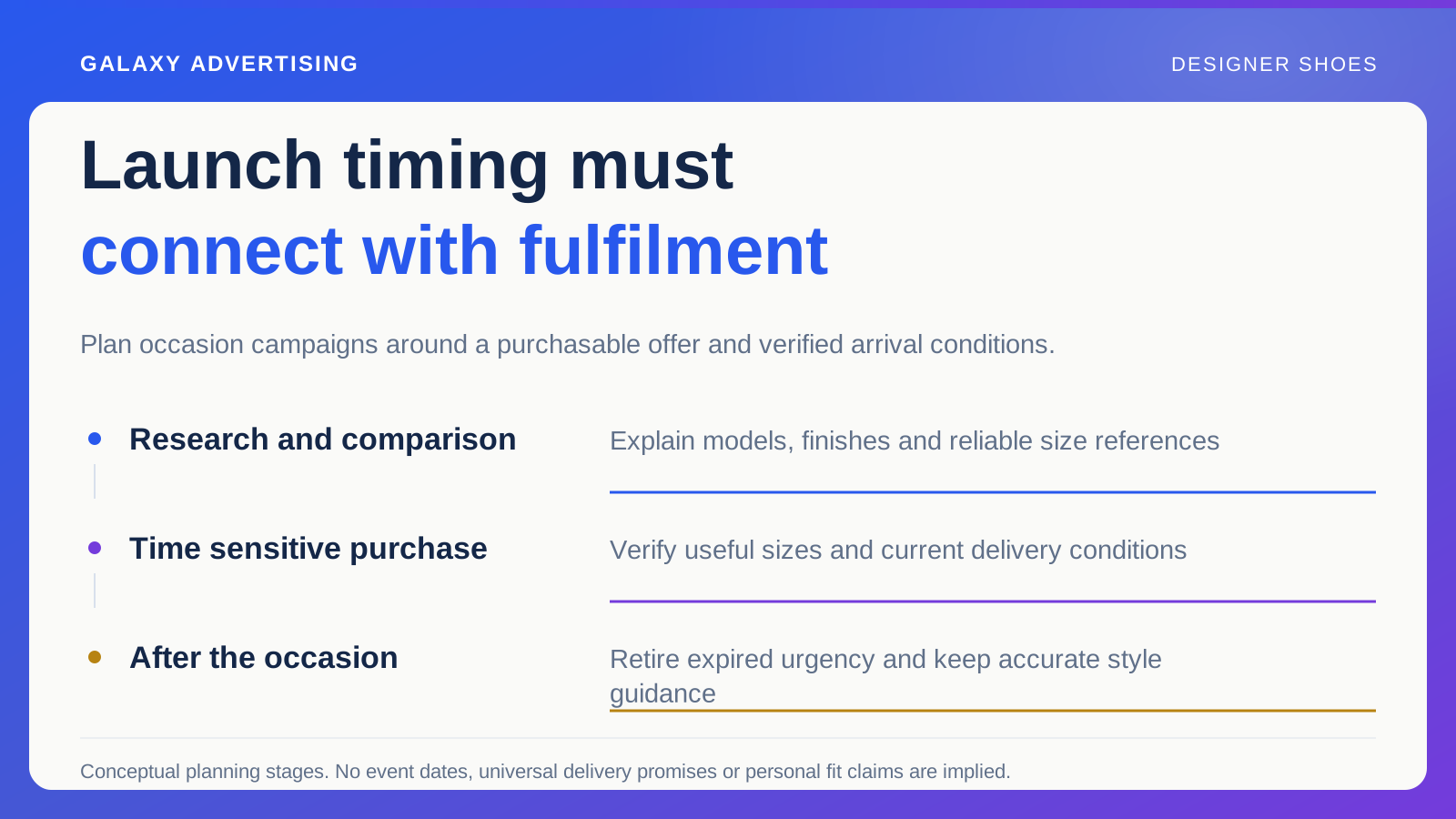
Early content can help someone compare styles and understand the range without insisting they order immediately. A useful explanation may lead to a relevant product visit before they're ready to commit. Not every part of a seasonal campaign needs to carry the same urgency.
Later messages may require more specific service information. Verify the current offer and conditions with the responsible owner instead of copying last season's deadline. Explain how that information applies to the product and customer route. A remembered promise isn't a substitute for a current check.
Keep the marketing date distinct from the operating commitment. Launching on schedule doesn't establish arrival when the shopper expects it. Your plan needs both calendars and an owner for their connection. That relationship matters more than having another launch task ticked off.
Review the whole occasion promise together
Inspect the asset, caption and destination as one communication. A scene can imply a use or service even where copy stays general. Check the impression against the actual product and offer rather than approve each element in isolation and assume their combination remains accurate.
A hypothetical event campaign might show a shoe beside an optional care kit and premium presentation. If those aren't included, make their role clear. Don't expect a starting price to explain the package or leave the shopper to infer which parts of the scene they'll receive.
Follow the route on a phone. Verify model, finish, selected size and relevant purchase conditions. Someone investigating shoes for a time sensitive task shouldn't encounter an avoidable identification puzzle after clicking. The practical route should carry forward the progress the campaign has already helped them make.
Give changes a reliable route into the campaign
Name owners for stock updates, delivery information and obsolete messages. The account manager needs timely operating facts, rather than an instruction to check the website occasionally. A clear handover makes the response something people can carry out during a busy period.
If a product becomes unsuitable for promotion, identify affected assets and destinations. Changing a product record doesn't automatically repair scheduled messages or a creator's old link. Keep a manageable campaign reference list connecting those outputs so you know where the offer needs attention.
Record the approved replacement offer and inspect it in the customer route. A rushed substitution can create another mismatch if the image or caption still describes the previous model. Seasonal pressure calls for clearer references, not less checking. Otherwise, the correction can inherit the same confusion it was meant to remove.
Compare the versions of the offer you actually sold
Review orders and retained contribution, the money remaining after the costs included in your agreed calculation. Include changes in product mix, price, availability and service conditions. An aggregate seasonal result can contain several materially different offers, so keep the context attached to the commercial view.
Interest in sold out sizes isn't guaranteed lost revenue. Use it to inform merchandising questions while distinguishing observed requests from forecasts of orders you never had the opportunity to fulfil. The interest can be useful without proving a precise missed result.
Connect questions with their stage of the route. Arrival uncertainty may need clearer service information; model confusion suggests another correction. Give customer service the same current model and service reference used in the campaign plan, made practical to find during an enquiry. An informal arrival answer based on an earlier offer can undermine an otherwise accurate destination.
Retire the urgency when its conditions end
Assign removal of expired deadlines and revision of messages after the occasion. A product can remain available while its seasonal promise is obsolete. Keep useful style guidance, but remove timing implications that no longer hold. An enduring comparison guide doesn't need an old event deadline attached.
The lasting value of the season is operational memory: which models were purchasable, which questions mattered and which promises took coordination. That prepares the next deliverable offer. Launching the same urgency earlier won't resolve a size or service promise that was never coherent.