A customer has your projector page open beside a cheaper retailer's offer. Yours promises expert advice, but says little about what that covers or how to obtain it. You may offer genuinely valuable support; the page has left the customer unable to judge it.
Expertise becomes a commercial benefit when it helps resolve a specific decision. Show its scope, the evidence behind it and the practical route to assistance. Saying the team knows more than competitors gives a new shopper little they can assess for themselves.
Find a question that calls for judgement
Ask sales for enquiries that changed a recommendation. Look for a decision rather than general enthusiasm for the category. Perhaps an intended equipment combination needed a different connection arrangement, or a model did not suit the planned location. The useful point is what the advice changed.
Remove personal details and verify the product facts before using an example. If the situation cannot be documented or appropriately shared, use a clearly hypothetical scenario. Demonstrate how the team thinks without manufacturing a success story.
Choose a question the business can answer consistently. A specialist promise is fragile if it relies on one person's informal availability or knowledge that nobody has recorded. The advertised service needs a process behind the person.
Tell the customer what the conversation involves
Describe what information the adviser will request and what sort of conclusion they can provide. Are you helping select a model, checking a stated equipment combination or arranging a separate installation assessment? Those are different promises.
Keep the boundary visible. Advice based on facts a customer supplies differs from inspecting their room or equipment. A short online conversation should not imply verification of conditions nobody has actually observed. Clear scope makes the assistance easier to trust.
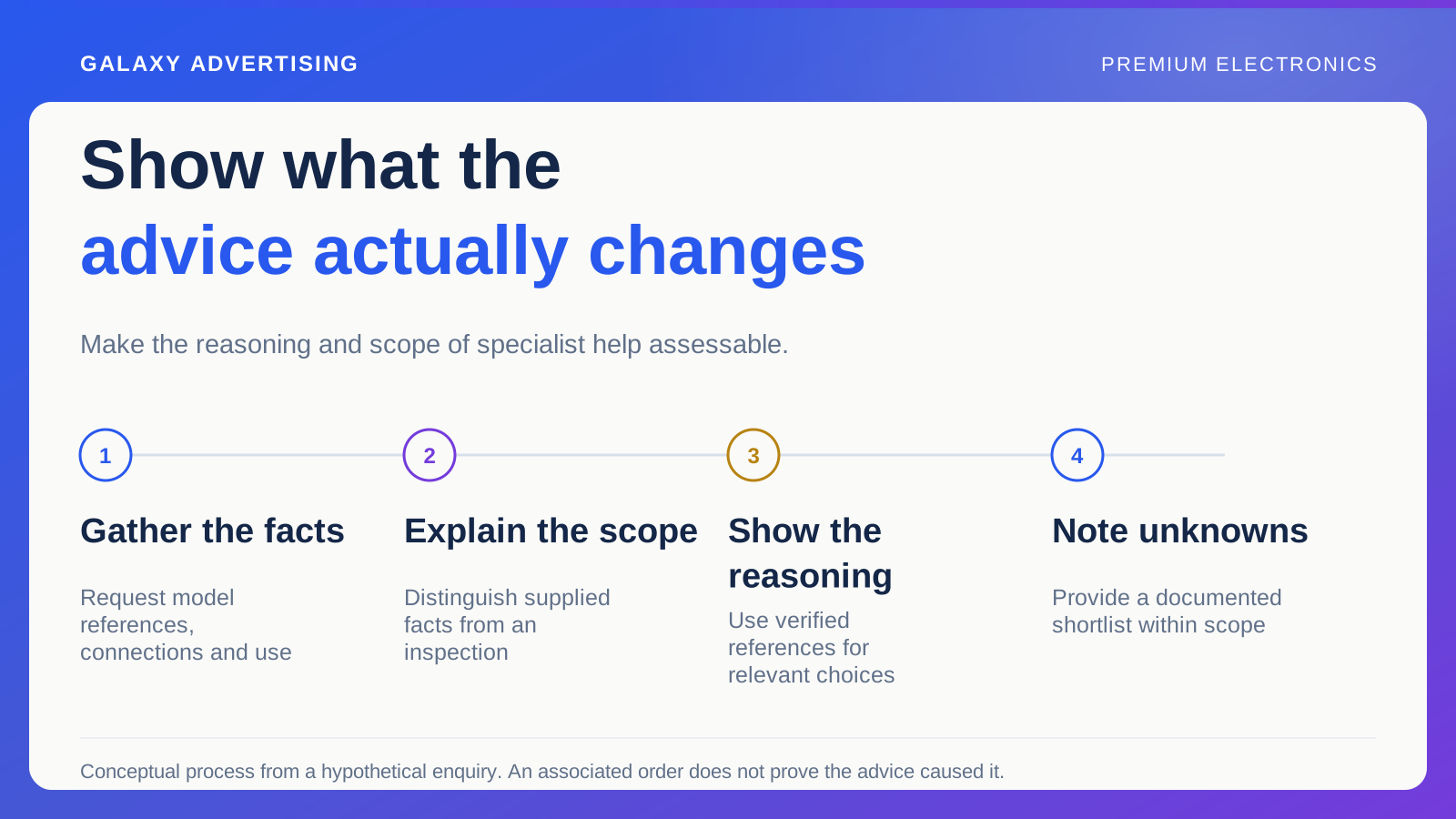
For a hypothetical audio enquiry, an adviser might request existing model references, intended connections and the main use. The result could be a documented shortlist with unresolved questions identified. That gives someone more to assess than a request to speak to passionate experts.
Let people see the reasoning
Where appropriate, show the output: a labelled comparison, a concise explanation of a meaningful specification or a checklist of details needed before recommending a model. Build technical claims on verified manufacturer information. The evidence should sit close to the promise.
Help the shopper judge the reasoning rather than admire the abbreviations. Unexplained technical language does not make the adviser more useful. Clear language is part of the service the customer is being asked to value.
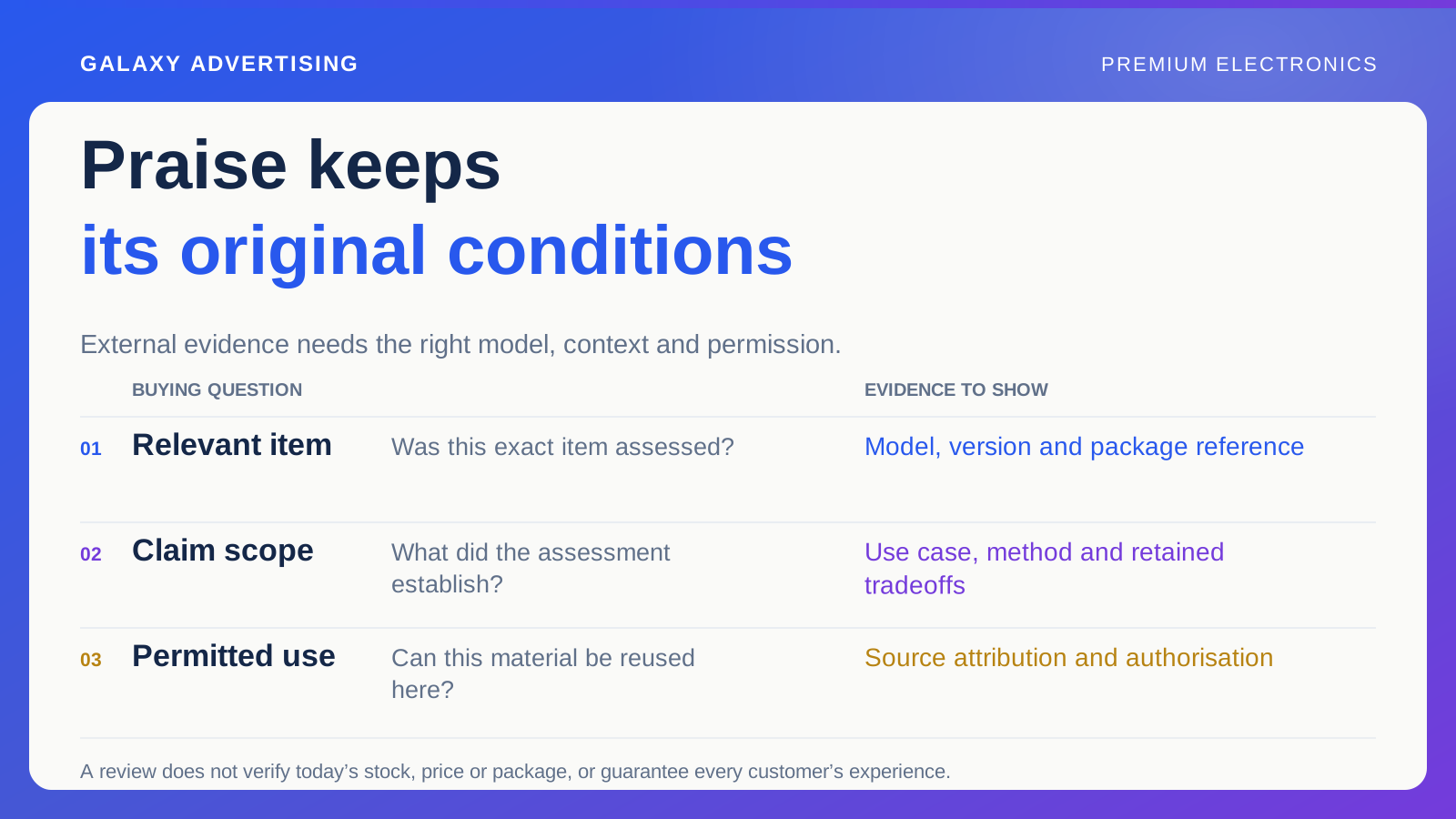
Verify the current scope of any qualifications, manufacturer relationships or training you mention. Familiarity with a brand should not imply official endorsement without support. Let the retailer's useful work remain visible without borrowing a status the business cannot establish.
Separate advice from what comes after purchase
Prepurchase advice, postpurchase guidance and installation are different services. Say which ones an order includes and which need another arrangement. The customer should understand that distinction before committing to the product, rather than discovering it when they ask for help.
Describe available contact routes and material limits the business can maintain. An ambitious response promise becomes an operational obligation. Make sure the sales team has agreed to support it before the website offers it on their behalf.
Do not use general reassurance to blur a product limitation. If a model needs extra equipment, say so. Good support explains the actual offer; confident service wording cannot make an unsuitable configuration suitable.
Show one useful decision in the advert
Choose a situation the creative can explain clearly. A short video might show an adviser comparing two documented connection options, or explaining why a particular use changes the shortlist. It does not need to recite the whole service policy to make the benefit tangible.
Use actual item references and preserve the qualifications behind the recommendation. When simplifying the conversation, check that the shorter version keeps every condition that matters to the conclusion. Brevity should not silently strengthen the claim.
Send people to a destination where they can inspect the relevant models and reach the advice service. A company page about the team's experience can still leave the buying question unanswered. Continue the useful conversation introduced by the advert.
Check whether the service can fund its own role
Track the enquiries the proposition attracts and how your team handles them. Separate suitable buying questions from requests the business cannot reasonably serve. Advising time is not automatically wasted, but its commercial role needs to be understood.
Review associated orders on your agreed contribution basis, meaning the money remaining after the costs included in that calculation. Premium service can add work without leaving enough value to fund it. That may call for reviewing scope, product selection or pricing, rather than immediately removing the service.
Keep the evidence's limits beside the result. Someone who speaks to an adviser and later buys can have several influences. Records can illuminate the route without proving that the conversation alone caused the sale. Useful service evidence and a complete causal claim are different things.
Keep the promise workable as products change
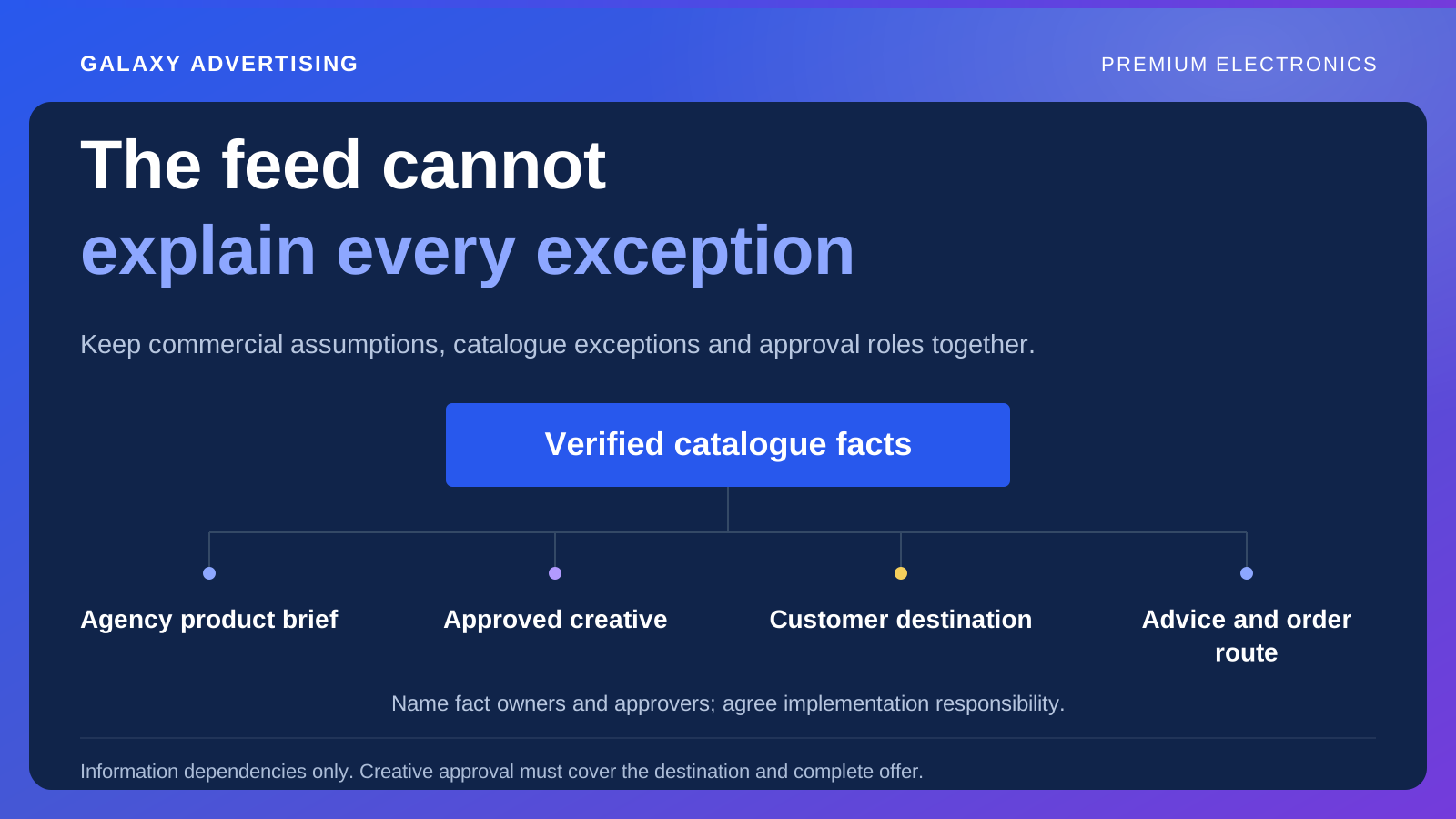
Give named roles responsibility for advice examples, contact arrangements and product references. A model change can require revising the evidence behind the service proposition even when the headline promise remains accurate. Assign the maintenance rather than assuming it will happen.
Use repeated enquiries to improve product pages. If advisers keep answering the same factual question, clearer website information can leave more time for decisions that genuinely need judgement. Withholding basic facts should not become what makes the service necessary.
Specialist advice can earn attention and, in some circumstances, justify a price difference. The strongest evidence is the useful decision it enables, through a credible process with an honest boundary. Give the customer that to weigh against the cheaper offer.