 Google Ads
Your new agency opens the account and starts asking why a product group was excluded, which purchase action matters and what the previous tests established.
You've given them access. The explanations haven't come with it. A fresh start now risks paying for investigations the business has already done, simply because nobody preserved the reasoning.
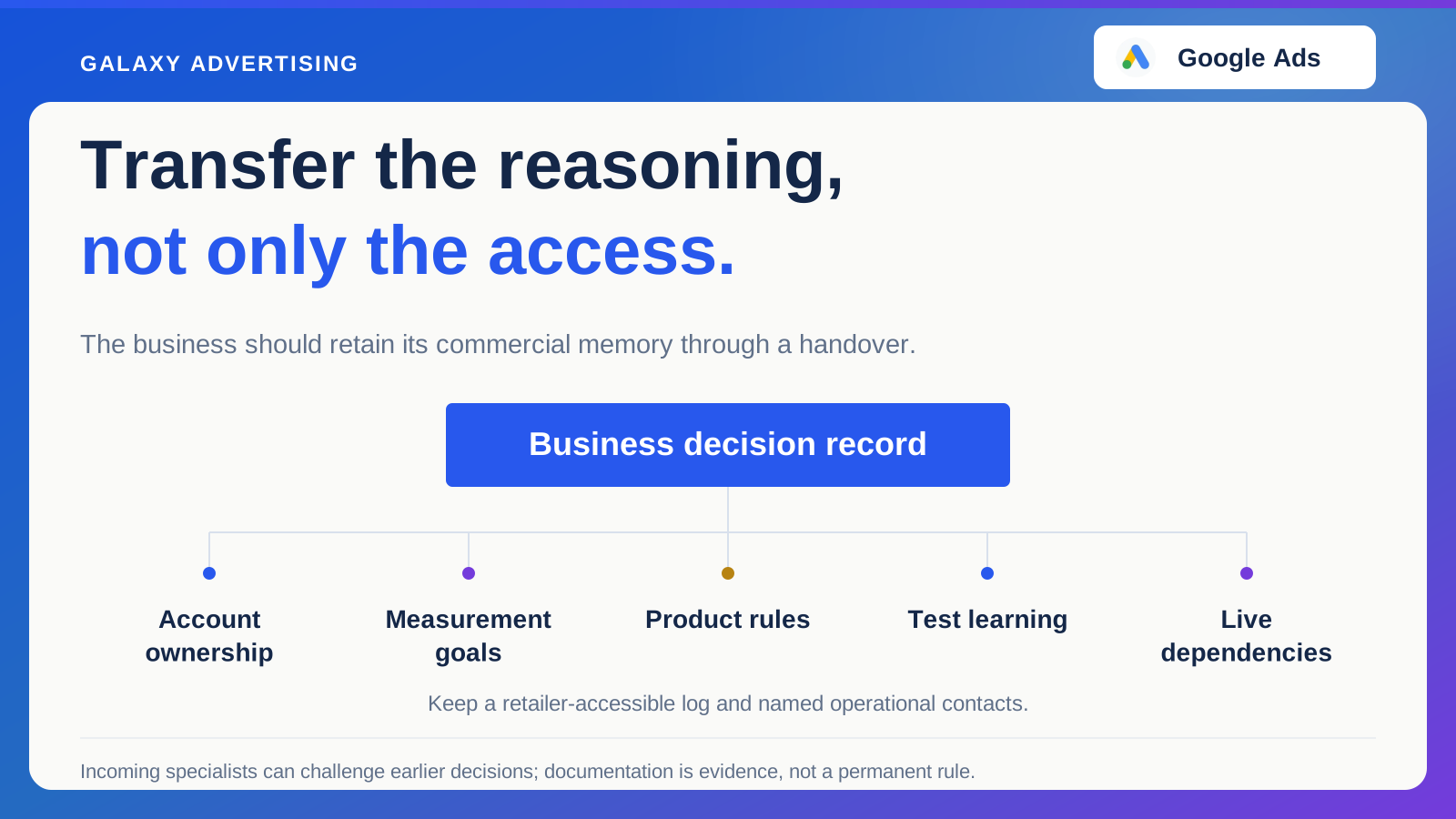
A good handover transfers the context needed to direct the advertising, while leaving the incoming team free to challenge it. You need to retain what exists, who controls it and why important decisions were made.
Confirm what the business owns and who can access it
Identify the advertising account and related business systems involved. Establish the owning organisation for each and the people or partners with access. Don't leave ownership to an assumption nobody checks until the relationship changes.
Use current platform access processes and your approved arrangements. Sharing personal credentials isn't a handover solution. An agency relationship shouldn't, by itself, determine permanent ownership of business systems.
Record contacts for product data, analytics, website changes and billing. Advertising access doesn't give the new manager a route to fix every destination or data issue. Those operational contacts turn permission to open the account into the ability to get useful work done.
Explain exactly what the reporting counts
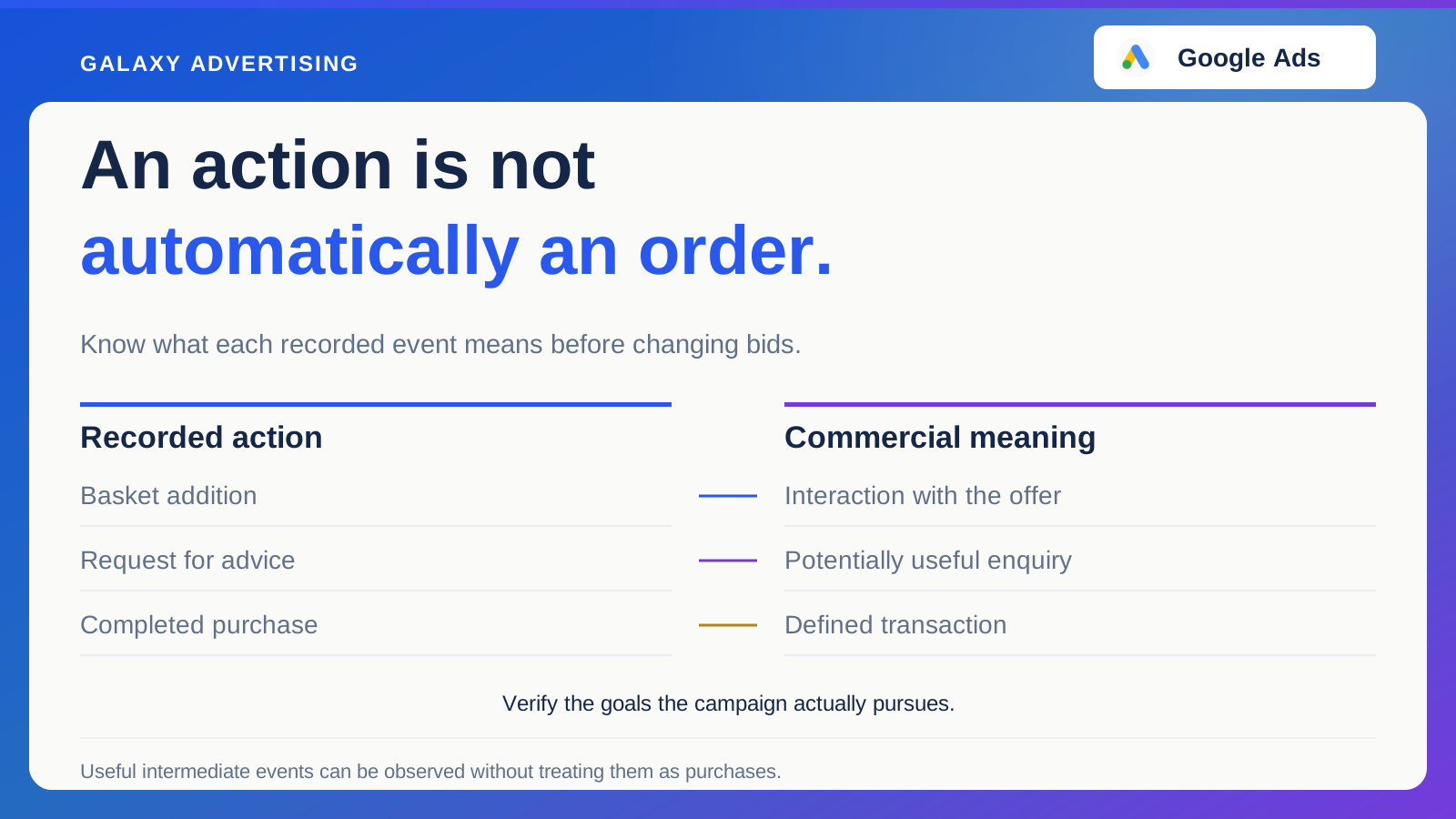
Provide an inventory of conversion actions, relevant sources, goal configuration and value basis. A conversion is a configured measured action, so explain what your business calls a purchase and how reporting connects with actual store orders.
Include known discrepancies and investigation status. Changing the agency shouldn't make an unresolved difference vanish from the record. The incoming team needs to know which uncertainty it is inheriting, rather than discover it as a supposed new problem.
Let the new team verify the setup. The handover is evidence to inspect, not a demand to preserve every decision. The aim is to avoid rebuilding the basics from ambiguous action names and disconnected screenshots. Verification and useful context can work together.
Give the product rules their commercial reasons
Document important groupings and why they exist. Include contribution assumptions, stock conditions, fulfilment differences and deliberate exclusions. Contribution is the money left after the relevant costs included in your calculation.
Separate current requirements from old workarounds. A group created for temporary availability trouble might no longer deserve permanent treatment. Keeping the original reason visible helps the incoming manager decide whether the rule still belongs.
Provide reliable product sources and someone authorised to approve changes. An agency shouldn't have to infer made to order conditions, specialist delivery or incomplete useful sizes from a summary export. Those facts can materially change what should be promoted and promised.
Pass on the ideas that didn't work too
List meaningful tests with their hypotheses, changes, observations and limitations. Include results that didn't support the proposed improvement, alongside ideas you kept.
Explain the conditions. Did pricing, availability or measurement change at the same time? A tentative observation shouldn't arrive at the new agency as an established rule. Otherwise, useful caution can quietly disappear between the test and the handover summary.
This record can save time without closing down new thinking. The incoming manager can challenge an earlier conclusion more intelligently when the original question and evidence are available. You want a better informed disagreement, rather than another team unknowingly starting the same argument from scratch.
Show what's live and who it depends on
Review current creative, destinations and promotion conditions. Flag offers needing operational updates and assets scheduled for retirement. The new team needs to know which promises are active now, rather than just what's filed in the archive.
Explain who approves product claims, updates the website and handles urgent faults. A campaign decision can sit unimplemented when the agency assumes responsibility or capability that belongs elsewhere.
Keep the list practical. A concise view of live dependencies helps more than a large archive with no indication of which facts still affect the offer customers see. Make the important work findable, rather than leaving it technically documented but operationally invisible.
Agree an inspection before demanding a visible overhaul
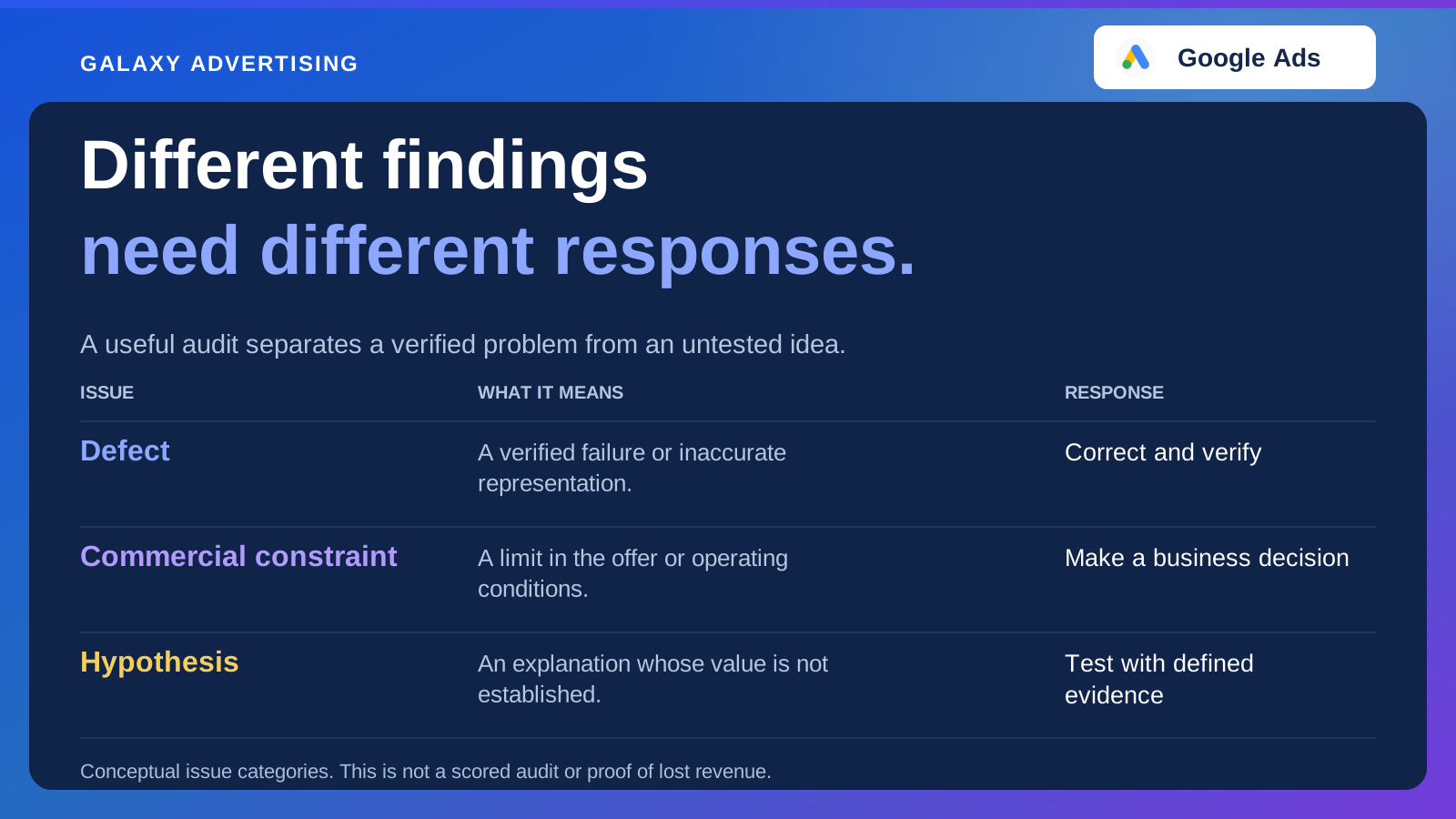
Ask the incoming team to separate verified defects, commercial constraints and hypotheses. Give it room to inspect before requiring an immediate restructure to demonstrate that the relationship has changed.
A fresh structure could be justified. Change itself doesn't establish improvement. The proposal needs a problem, dependencies and a way to evaluate the result. You should be able to understand why the new arrangement serves the business better.
Equally, a lengthy review shouldn't delay obvious repairs. A broken destination or inaccurate statement can be corrected while wider strategic questions are assessed. Record the correction so the investigation and work remain understandable together.
Try explaining one inherited decision
Choose an exclusion, grouping or measurement choice and supply its recorded reason. Ask the new manager what they'd verify before keeping or changing it.
A useful response separates the business requirement from its previous implementation and identifies missing evidence. This isn't a loyalty test for the outgoing team, or an invitation to criticise immediately. You're checking that the handover gives the specialist enough context to make accountable choices.
If the explanation relies on an inaccessible document or one person's memory, make the record more durable. Then try the same exercise with a live dependency, such as a stock rule or destination correction.
Confirm who approves, implements and checks completion. Having somebody who can now open the account shouldn't be confused with operational readiness. This exercise makes the first working relationship concrete enough to expose what's still missing.
Keep comparisons understandable through the transition
Agree which commercial reference and definitions will continue. If the new agency changes the reporting basis, identify the break. Differences in its first report shouldn't all be implied to result from its performance.
Retain a decision log you can access independently of an agency's internal workflow. Record material business choices, rather than every minor account interaction. The point is to keep useful reasoning available to the business that paid for the learning.
The relationship can change without the business losing its memory. Give your new agency context it can inspect and challenge, while keeping ownership, instructions and the reasons behind the next decision understandable to you.