 Google Ads
What if you copied your strongest campaign across the catalogue, then found the new products had different margins, availability and customer questions?
The account structure might be reusable. The conditions behind the result aren't necessarily coming with it. It's understandable to want more of what worked, especially when the alternative looks like starting the assessment again.
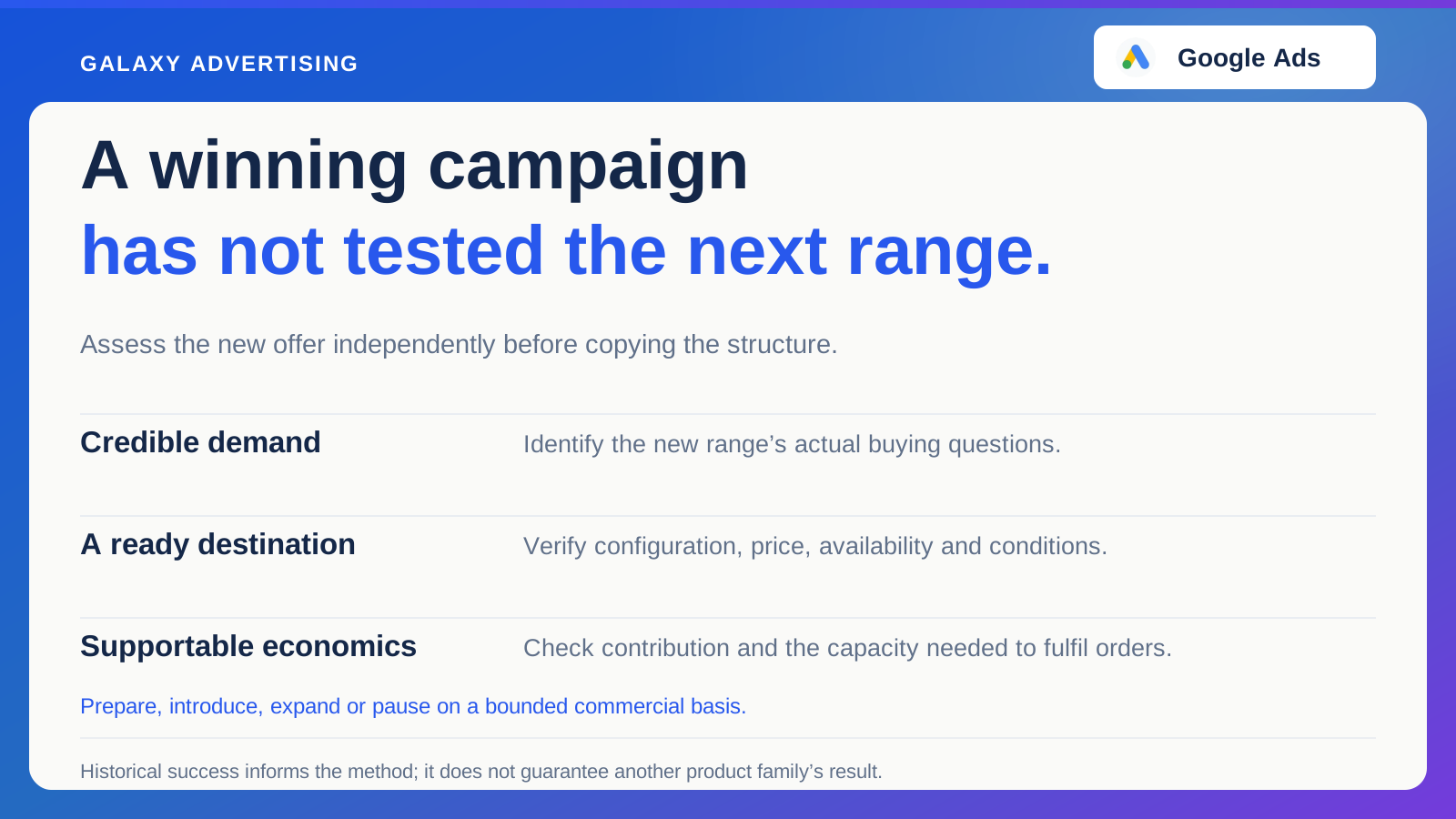
Use the successful method to examine the next range. Don't treat the earlier commercial result as something duplication can guarantee.
What actually made the existing offer work?
Review the offer, customer demand, destination, fulfilment and commercial contribution, meaning the money left after the relevant costs in your calculation. Don't assign the entire outcome to the campaign arrangement that happened to contain the products.
Look for dependencies: strong manufacturer awareness, unusual availability or a particularly clear value proposition. Those could have helped the earlier range without transferring to another category. Knowing what mattered is more useful than copying the visible structure alone.
Inspect orders too. A small number of exceptional transactions can make a family appear more consistently attractive than the evidence supports. Separate a promising observation from a dependable pattern before making it the argument for expansion. Otherwise, the next range could be asked to repeat an outcome that wasn't yet established as repeatable.
Is the new range ready, or does it need preparation?
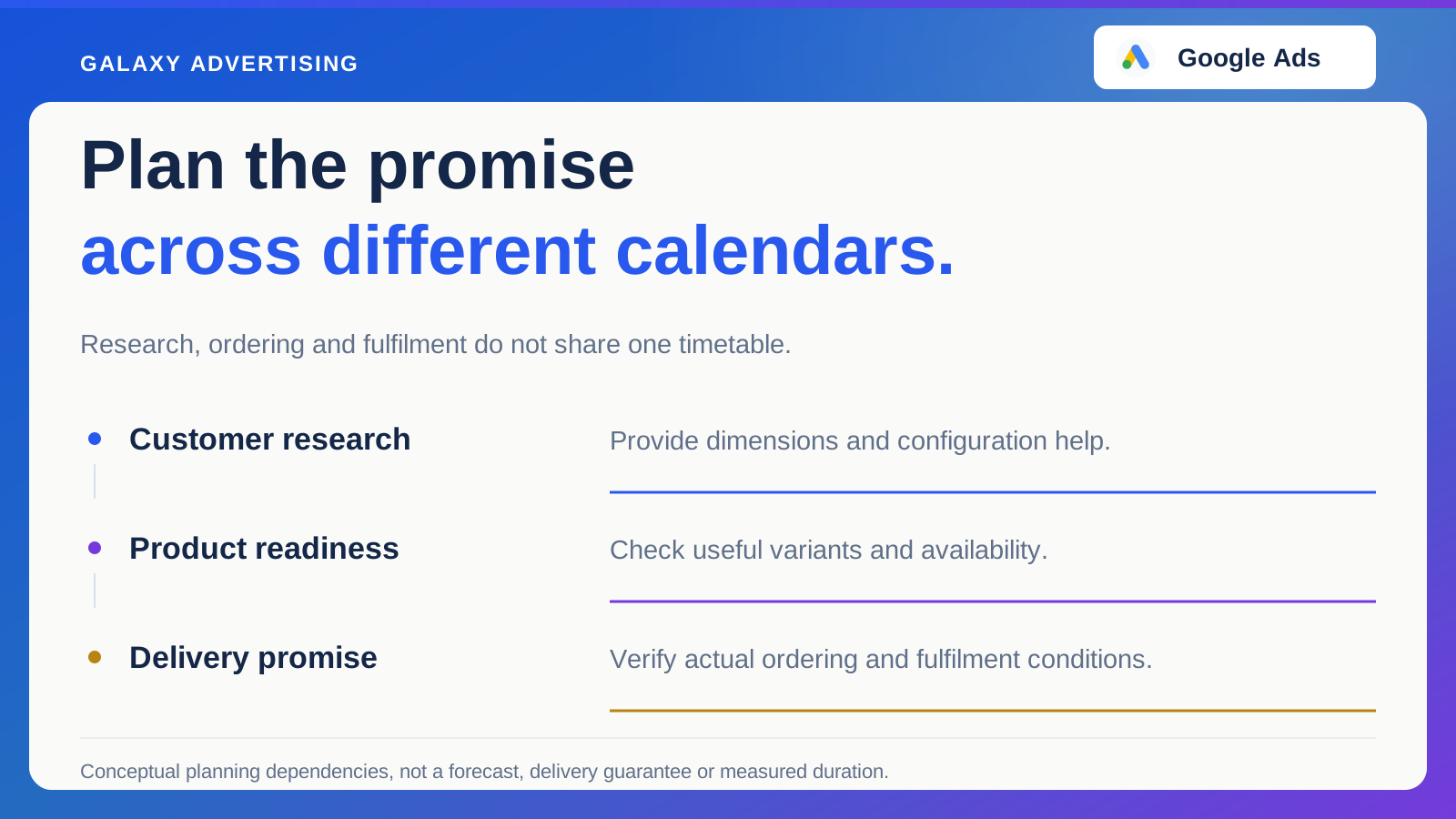
Check that you can identify, describe and supply the products accurately. Review useful variant availability, meaning the sizes, finishes or configurations customers can buy, alongside destination information and service promises.
Calculate contribution assumptions independently. Similar selling prices don't establish similar acquisition allowances, especially where delivery or return handling differs. You need to know what these orders can leave, rather than borrow the economics of another range.
Preparation isn't the same as a poor opportunity. Record a missing prerequisite and give it an owner. That's more useful than promoting prematurely or rejecting the range permanently because the current page is incomplete. The assessment should help decide what happens next.
Which customer questions will this offer answer?
Identify purchase questions and the available evidence of relevant interest. Don't assume search language, manufacturer familiarity or the consideration process mirrors the established range.
A model specific electronics offer and a configurable furniture range can require different explanations and destinations. Understanding why a winning phrase mattered to the earlier buyer could teach you more than pasting it into the next campaign.
Bring account evidence and product knowledge together. The person seeing demand signals and the person understanding practical product differences both belong in the selection discussion. Their combined view can expose a gap neither would see from the advertising summary alone.
Change one meaningful dimension where possible
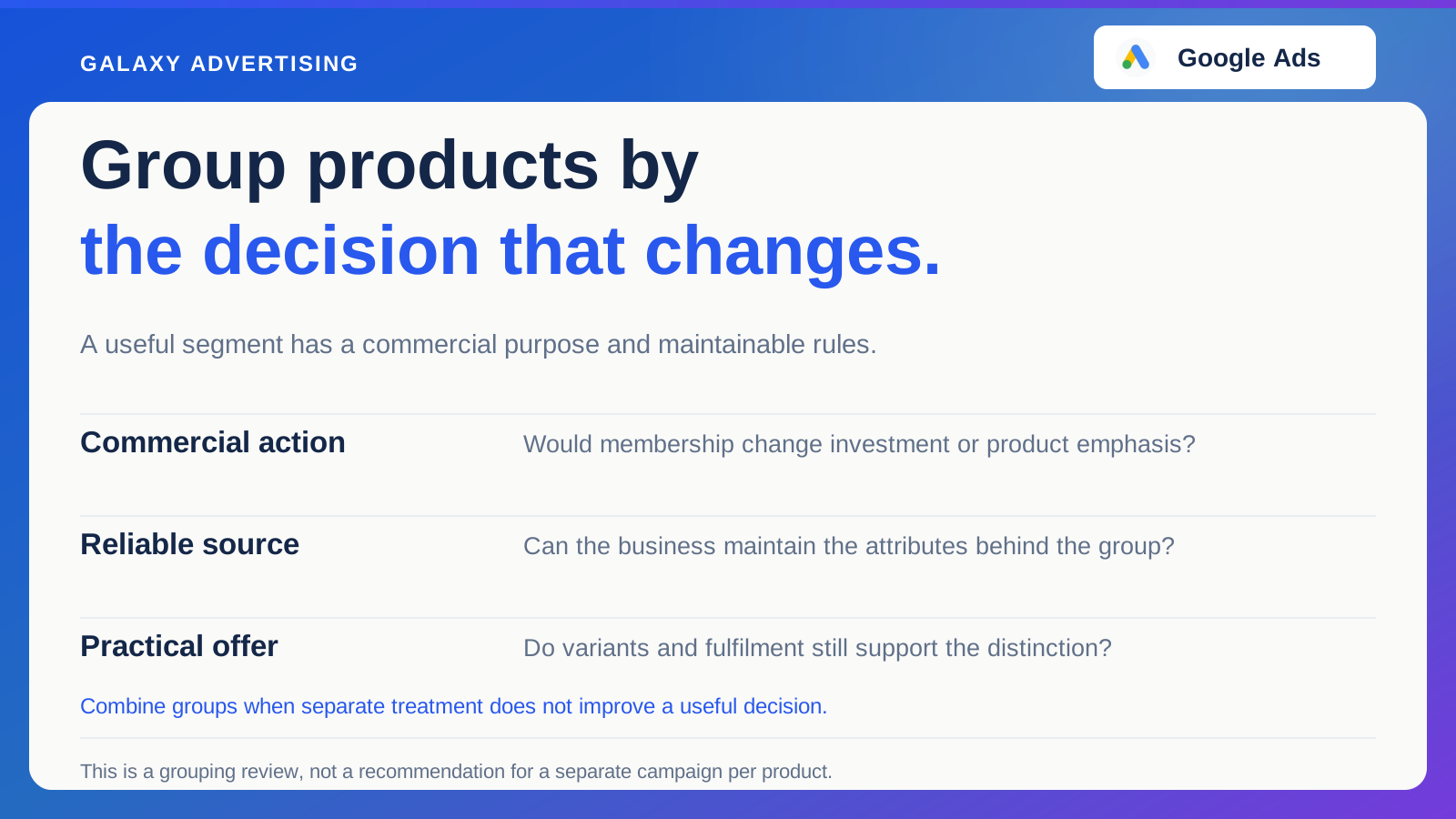
Decide whether the next step introduces more products, a different customer need, a wider market or more emphasis on the existing proposition. Changing all of these together makes the movement harder to diagnose.
Simultaneous operational changes aren't always avoidable. Make the question and changing conditions explicit when they happen. The discipline is in knowing what changed, rather than insisting normal trading must stop for the campaign.
Choose a scope you can review. A smaller coherent introduction can produce more useful evidence than distributing attention across unrelated items with individual results too limited to interpret. The point is to make the next decision answerable, rather than make the launch list longer.
Verify the route before sending more people into it
Check the live destination for the advertised item, selected configuration, price, availability and essential purchase conditions. A planned page isn't the same as a verified offer.
Resolve questions specific to the category. Furniture could need configuration and delivery clarity. Appliances could need a more explicit service proposition. Keep product data consistent with the destination and reliable business source, so the customer's understanding doesn't change between them.
A copied template provides structure. It doesn't establish readiness. The business still needs to verify that the structure accurately represents the new products and their practical differences. The familiar layout shouldn't make an unfamiliar offer skip its factual checks.
Agree what would justify the next commitment
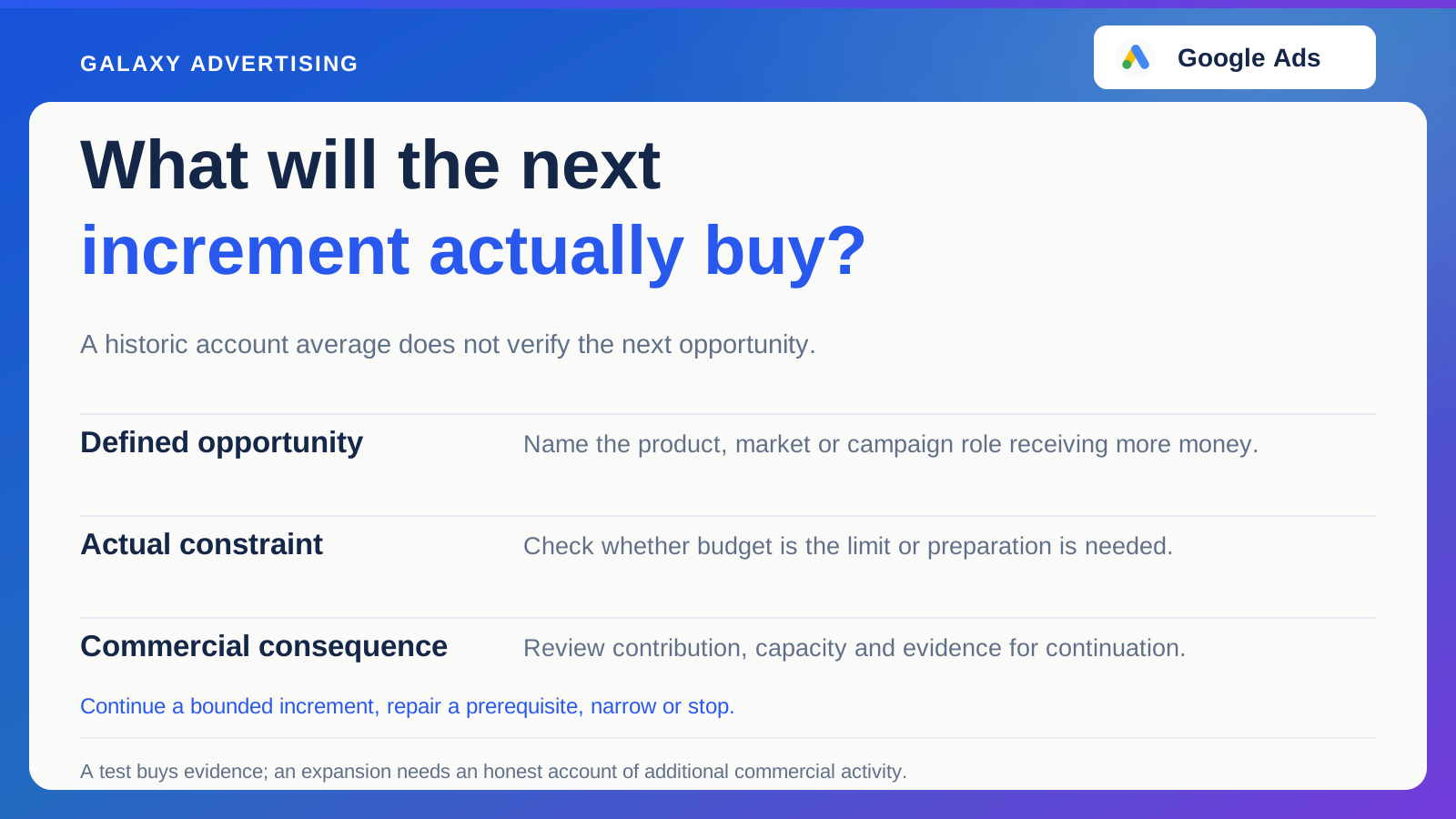
Define what would support continuing, expanding or pausing the introduction. Read relevant orders and contribution beside the supporting observations available in the account.
An unfamiliar range can have a different early learning question from a mature offer's ongoing target. Make that difference deliberate and bounded. It shouldn't become an unlimited explanation for weak performance.
Inspect price, availability and fulfilment changes during review. The offer could have changed while the test was running. Its different behaviour doesn't automatically prove the campaign method works or fails universally. You need the conditions to interpret what happened and choose the next step.
Invite operations to challenge the proposal
Give the range to your product or fulfilment owner and ask what would become difficult if suitable orders arrived. Configuration availability, specialist delivery, assembly support or supplier replenishment timing could all matter.
Record constraints in terms the advertising manager can act on. “We're busy” doesn't establish an operating limit. Equally, an attractive campaign result doesn't remove a genuine capacity problem. Both teams need enough detail to make the commercial choice together.
Agree how changes will be communicated and which message or product emphasis should respond. Include the destination owner when the service proposition needs clarification. A prerequisite discovered before launch could be inexpensive to resolve and costly to find afterwards.
This checks whether the whole business can support the opportunity, rather than whether it looks convincing inside the historical account report.
Keep the ability to narrow or stop
More orders can increase packing, delivery and support demands. Ask operations which constraints matter if the introduction succeeds and how they'll notify the team.
Limited service capacity can require a different emphasis from a range you can fulfil at greater volume. Marketing shouldn't keep describing an unchanged offer after material operating conditions alter.
Retain a clear route to narrow or stop activity. Expansion is a commercial option. Announcing it doesn't make defending it compulsory.
The next range deserves its own assessment of demand, destination, fulfilment and economics. Historical success can give you a good way to ask those questions. It can't answer them on behalf of products you've only just decided to promote.