 Google Ads
Did the discount leave your business with more to work with, or just more orders to fulfil?
It's an uncomfortable question after a campaign report has already called the promotion a success. Advertising could have done precisely what you asked: attract purchases of the discounted offer. The missing decision was whether those purchases were worth obtaining on those terms.
Give a promotion a commercial brief before turning it into an advertising instruction.
What do you need the offer to change?
You could be introducing a range, moving specific stock or testing whether price is the obstacle. Those are different purposes. Choose one clearly enough that the result can be judged against it.
Don't call every promotion growth without identifying the products and customers meant to benefit. A broad discount can get a large response while hiding whether the intended commercial problem improved.
Write down why a price incentive fits the problem. If customers don't understand the configuration or delivery service, a lower amount doesn't necessarily answer their question. You could be giving away contribution while leaving the original uncertainty intact.
Follow the discount through the actual costs
Use a consistent cost basis and include the expenses relevant to fulfilling the promoted order. Product and delivery costs don't necessarily fall when selling price does.
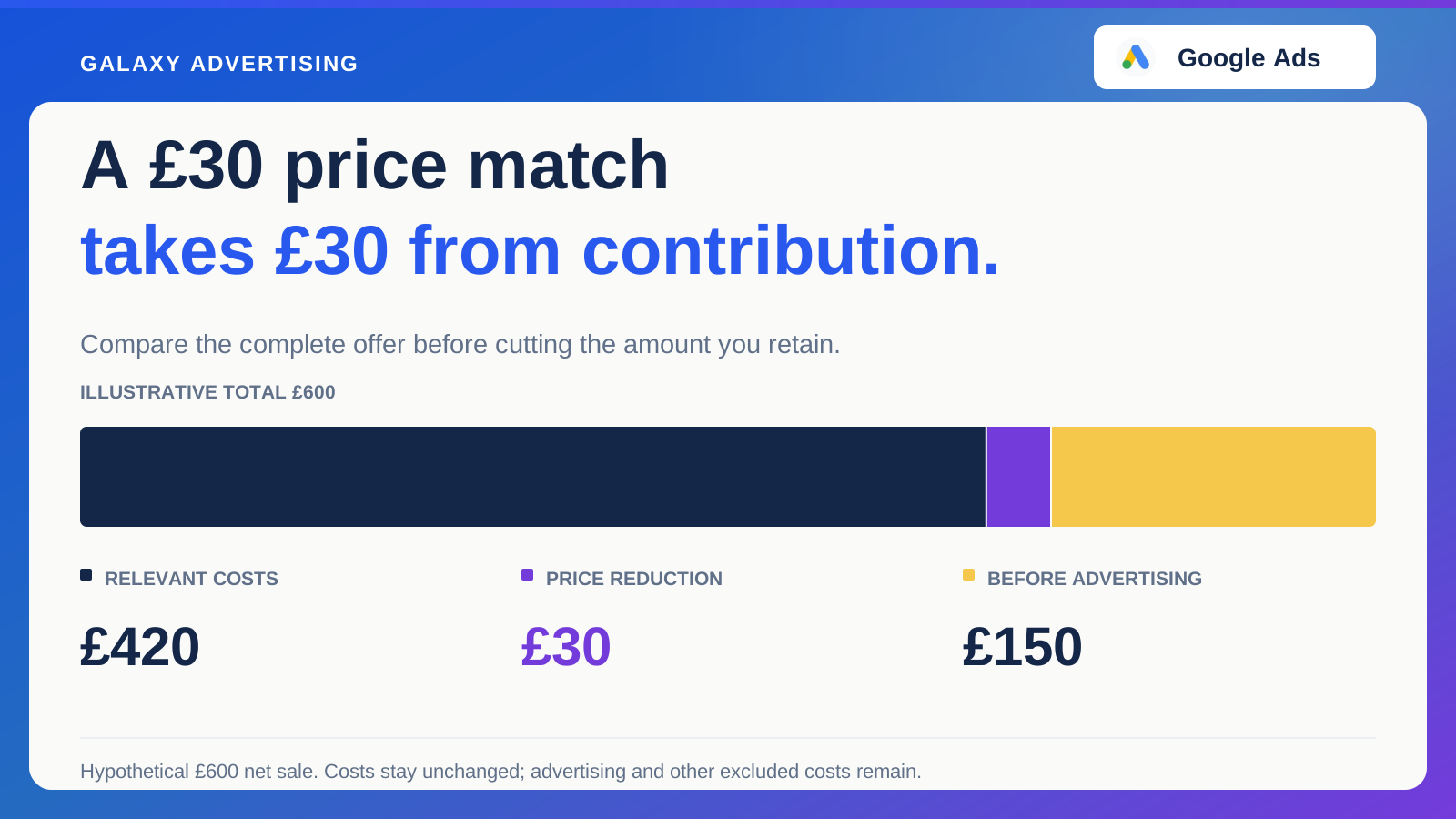
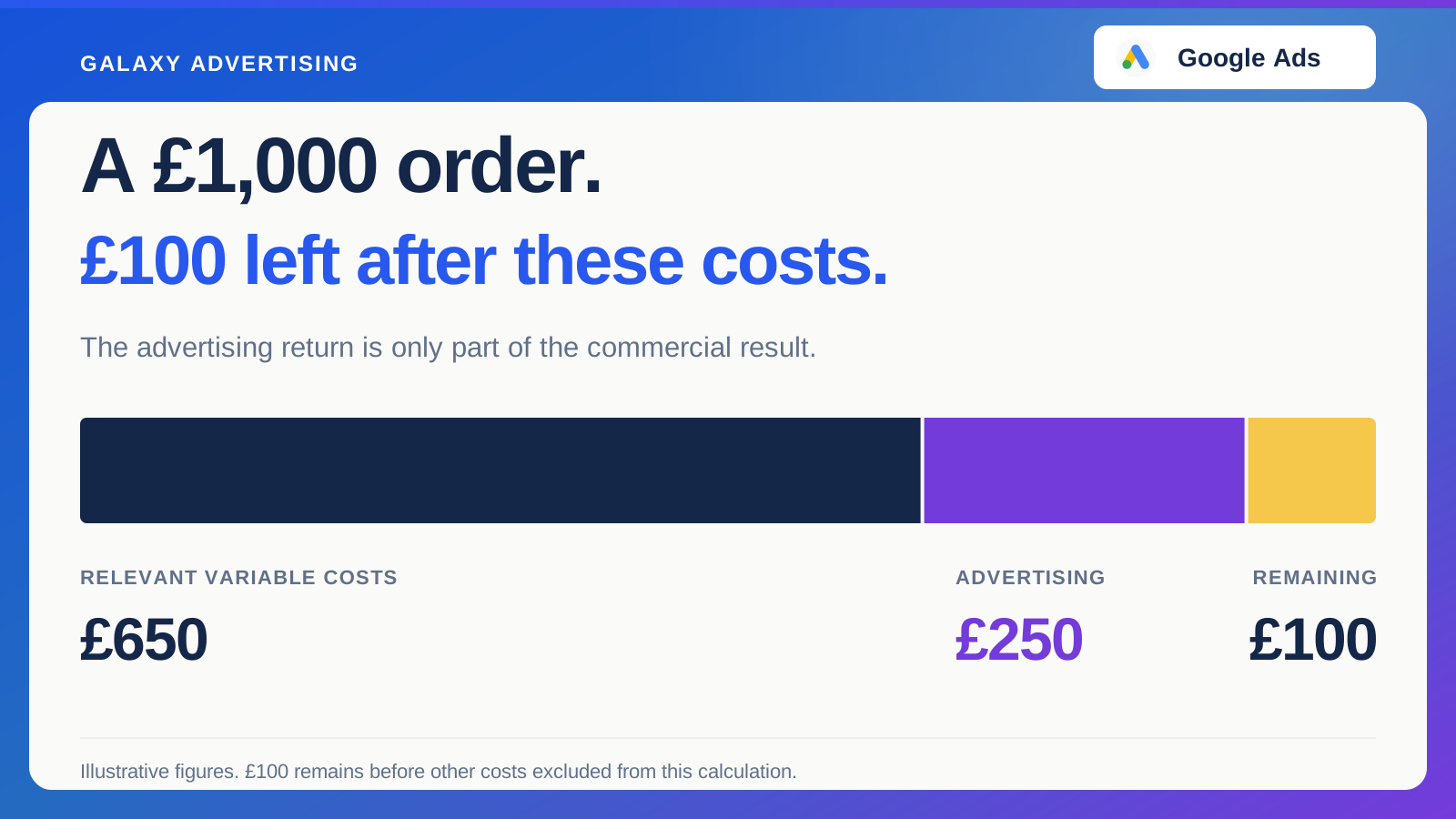
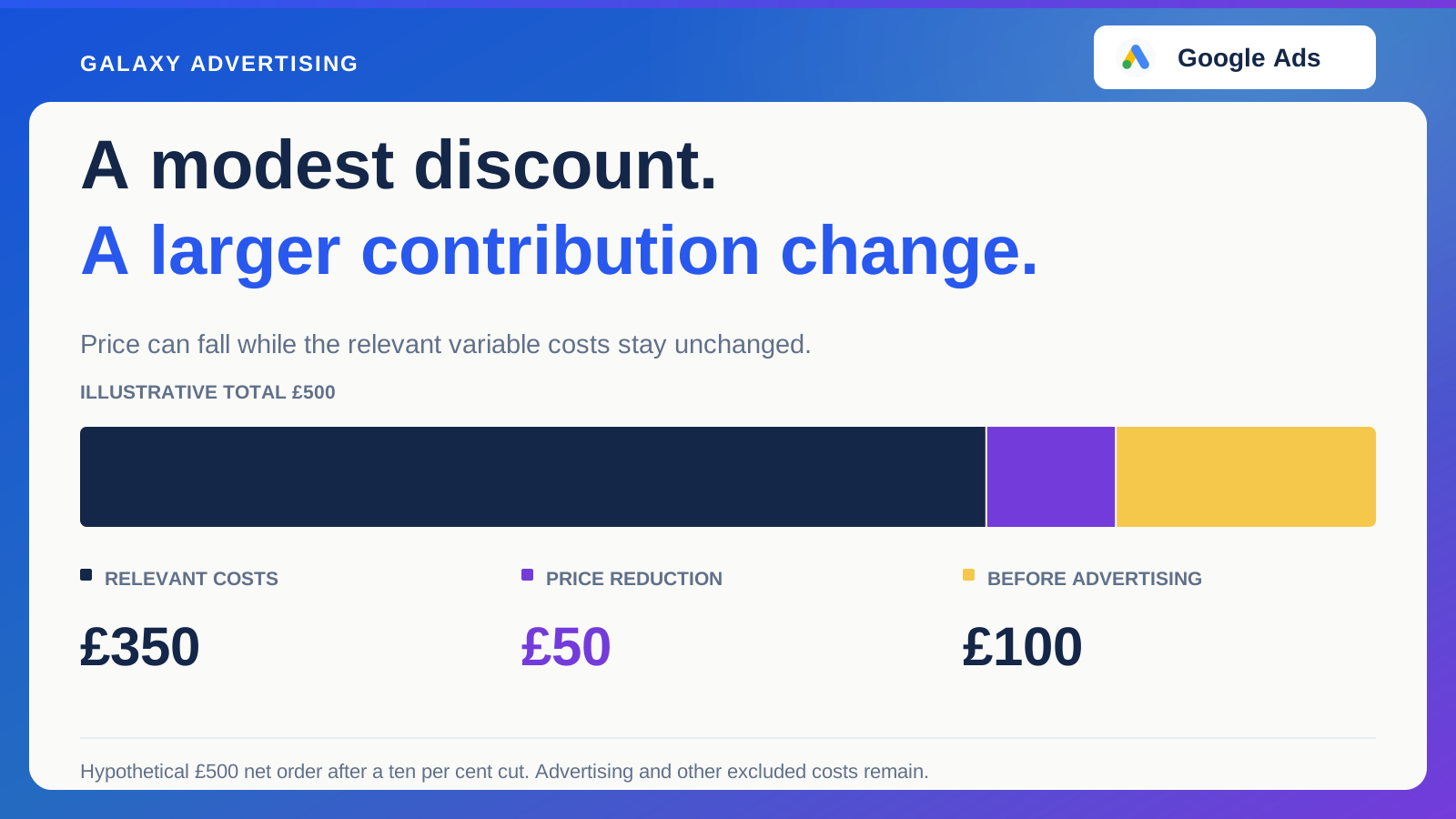
Take this hypothetical example. You're reviewing a £500 net order with £350 of relevant variable costs, the costs that change with the order. It leaves £150 before advertising and other costs excluded from the calculation.
Offer a ten per cent price reduction and revenue becomes £450. If those variable costs stay unchanged, contribution, the money remaining after those relevant costs, becomes £100. You've lost £50 of the original £150 before paying for advertising.
That is rather more than the headline makes it feel.
A five per cent or ten per cent message isn't the whole financial consequence. This illustration isn't a recommended offer. Calculate yours using your actual figures before expecting the advertising to make the reduced economics work.
Which products can genuinely support it?
Review product economics and availability rather than applying the same incentive to the entire catalogue. A bulky range needing specialist delivery can behave differently from stocked accessories.
Look at useful variants, meaning the sizes or configurations customers can actually buy. A promoted style with limited options could attract people the current offer can't serve effectively. A broad eligibility statement shouldn't conceal a narrow practical choice.
Make the rule clear and maintainable. Whoever runs the promotion needs a reliable list or definition. The customer needs to know whether their chosen item qualifies. If that definition can't be represented clearly throughout the buying route, the offer isn't ready to launch.
Does the promise survive all the way to checkout?
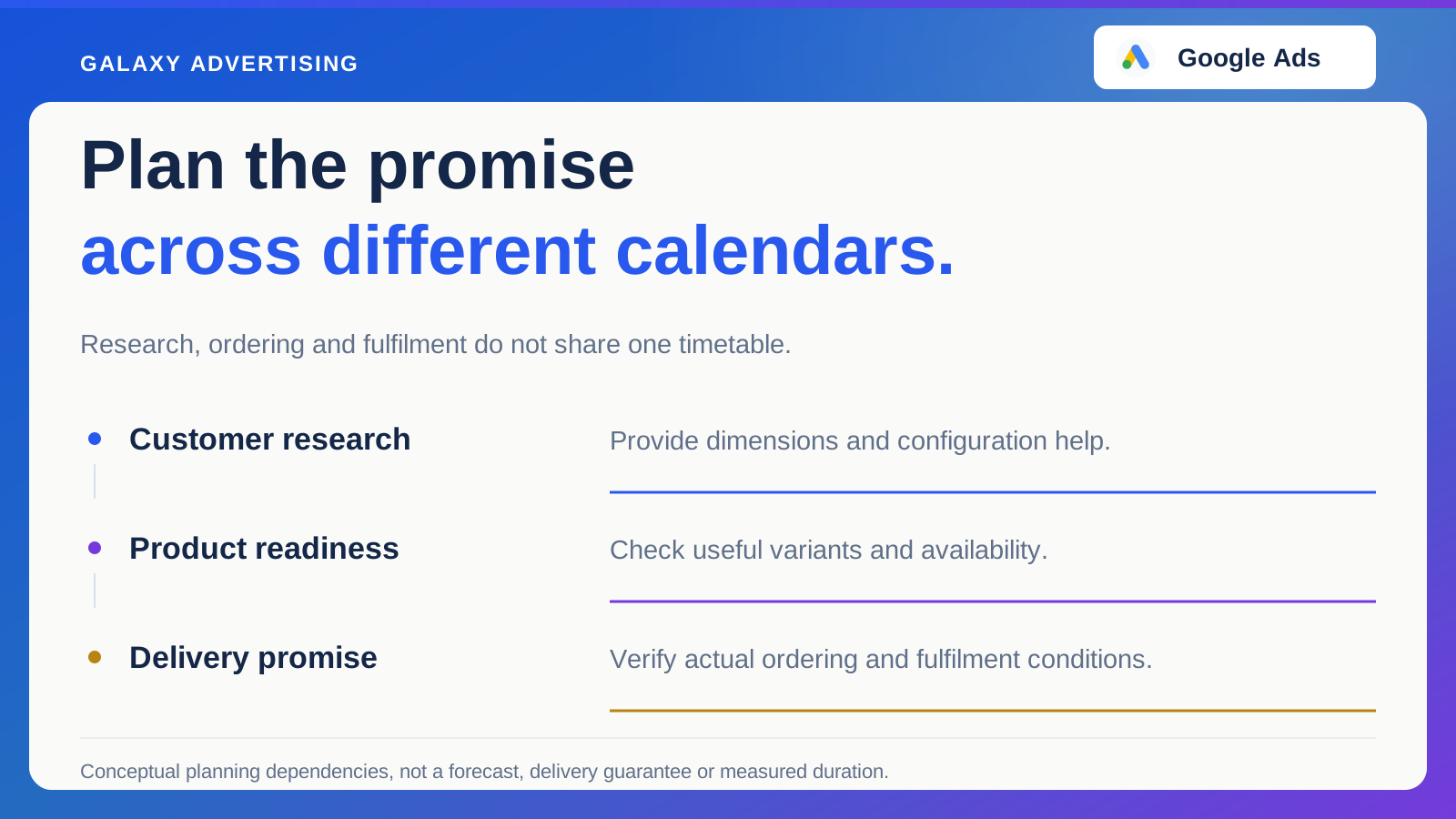
Inspect creative, product information, destination and checkout. Verify the qualifying item, displayed price, conditions and everything else necessary to understand the offer.
Check current platform guidance for supported promotion and product price representation. Convenience isn't a good reason to put promotional wording into factual fields where it doesn't belong.
If the discount requires an action or has an important limitation, explain it before commitment. Getting attention with a simple promise and then making it materially harder to obtain leaves the customer doing work the message didn't prepare them for.
Decide what the comparison can actually tell you
Record investment, products, stock and fulfilment conditions during the promotion. Changes in those factors can influence the result independently of the incentive.
Compare consistently defined revenue and completed orders. Inspect contribution under the promotional terms, including material shifts towards less attractive products. An order count doesn't tell you what the mix left behind.
If you're asking whether the discount created additional demand, keep that separate from how many orders the advertising system attributed during the period. Attribution assigns reported credit to advertising interactions. It's useful evidence, rather than a complete verdict on what caused the sales. The distinction matters when choosing whether to repeat the concession.
Include what happened after the orders arrived
More orders can change packing, delivery and support requirements. Confirm that you can fulfil the advertised promise at the expected scope, rather than treating the workload as a problem for after the campaign succeeds.
Review cancellations, refunds and other relevant information as it becomes available. An attractive initial sales chart can be an incomplete picture of the eventual commercial result.
Don't assume the promotion caused every adverse outcome. Investigate patterns pointing to eligibility, expectations or fulfilment issues, and identify a specific correction. Otherwise, a fixable problem can become a vague loss of confidence in the whole advertising channel.
Own the launch, the live offer and the ending
List eligible products, price basis, customer conditions and connected assets before approval. Verify the destination and checkout with a representative qualifying item and a relevant exception. An item that doesn't qualify needs a clear route, rather than leaving the shopper to infer a promise you don't intend.
Assign somebody to monitor stock and service constraints while the offer runs. Then name whoever changes or removes the message when its genuine conditions end or alter.
The asset library, product data and website banner can have different owners. One update won't necessarily reach them all. The offer needs a complete commercial lifecycle, rather than a carefully approved launch followed by an informal hope that everyone remembers when it ends.
At review, compare order mix and contribution with the original purpose. That gives the team something concrete against which to judge the whole exercise.
Keep the learning without keeping every discount
Retain what you learned about products, customer questions and commercial thresholds. A successful incentive doesn't automatically justify permanent discounted trading.
Check whether the normal proposition is clear enough. Explaining a genuine service or product distinction better could support future demand without the same price concession. Retire or update connected assets promptly too. A reused image with an expired promise can confuse customers after the main page has been corrected.
Every promotion exchanges something for the response it attracts. The useful question is what your business gave up, what it could fulfil and what remained when those orders were complete. That's the bargain the next offer needs to justify.