 Google Ads
The easy mistake is to see a cheaper appliance in Shopping and reach for your own price before checking what the other offer includes.
Price is the part you can spot immediately. Package contents, availability and fulfilment take more digging. Meanwhile, a lower number sits there looking like a complete explanation for disappointing sales.
Compare what the customer can actually buy before deciding whether to change pricing, product data, the range you promote or how you explain its value.
Are you comparing the same thing?
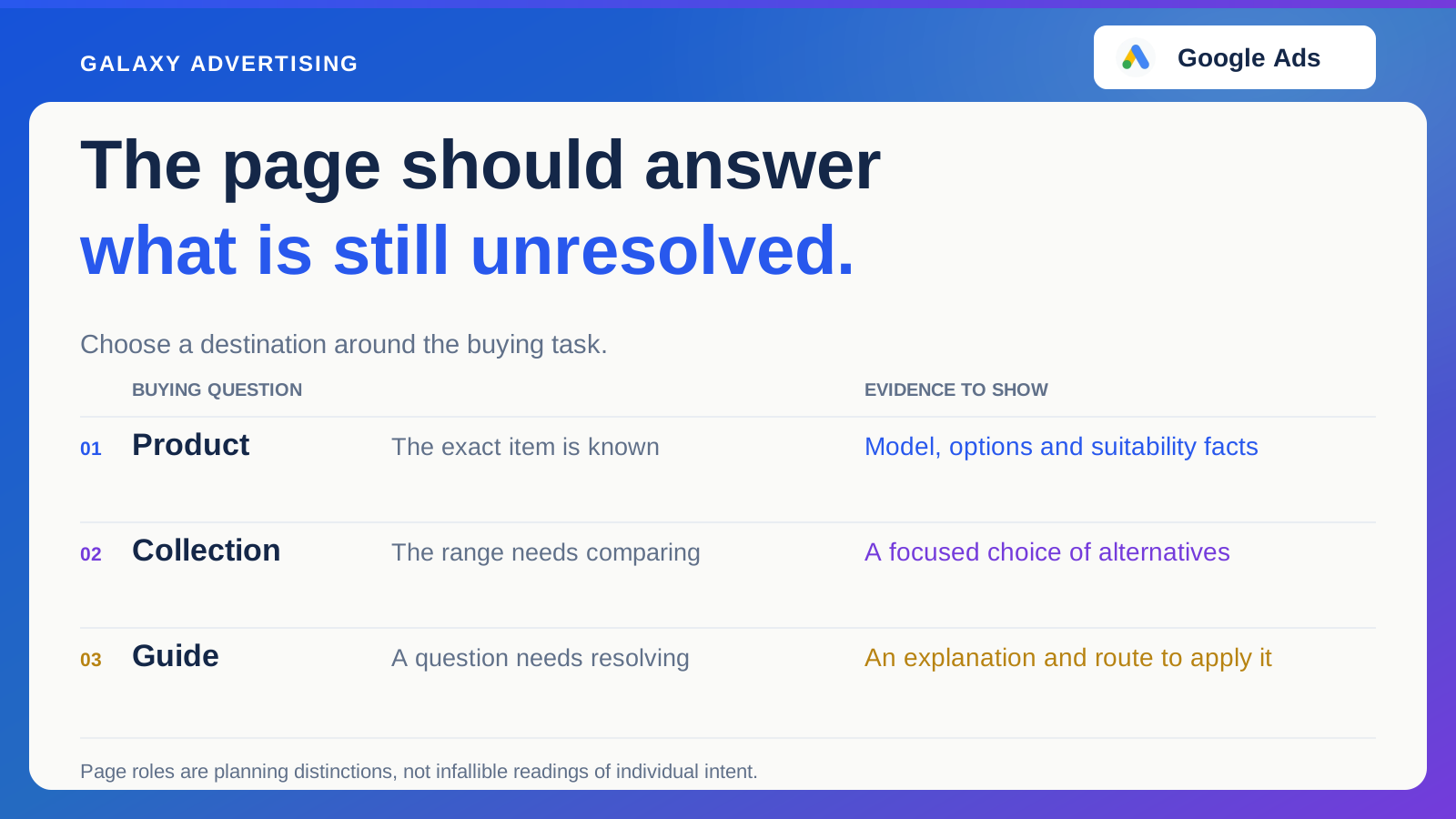
Check the model, variant, condition and included equipment. A variant is the particular configuration being sold. A familiar product name can cover different packages, so keep the evidence behind your comparison rather than relying on a cropped screenshot.
Follow the listing to its destination. Does the customer find the same item and price? Is the relevant version available? The most attractive advertised number doesn't necessarily describe every purchase someone could make.
This isn't about finding fault with a competitor. You're establishing what you're comparing before changing your own economics. A rushed comparison can produce a very real reduction in what your business keeps.
What arrives with it?
Compare material differences in delivery, installation, support and other genuine service elements. An appliance with a documented service package isn't automatically equivalent to the appliance sold without it.
Be just as precise about your own offer. “Premium service” doesn't justify a higher price by itself. Explain what's included and make the conditions easy to find. The customer needs something they can compare, rather than another adjective to interpret.
Don't speculate about the other seller's quality or reliability. You can explain your verified offer without making unsupported statements about theirs. If the offers are materially equivalent, acknowledge it. Sometimes the distinction we'd like to have simply isn't there.
Work out what a price match would cost you
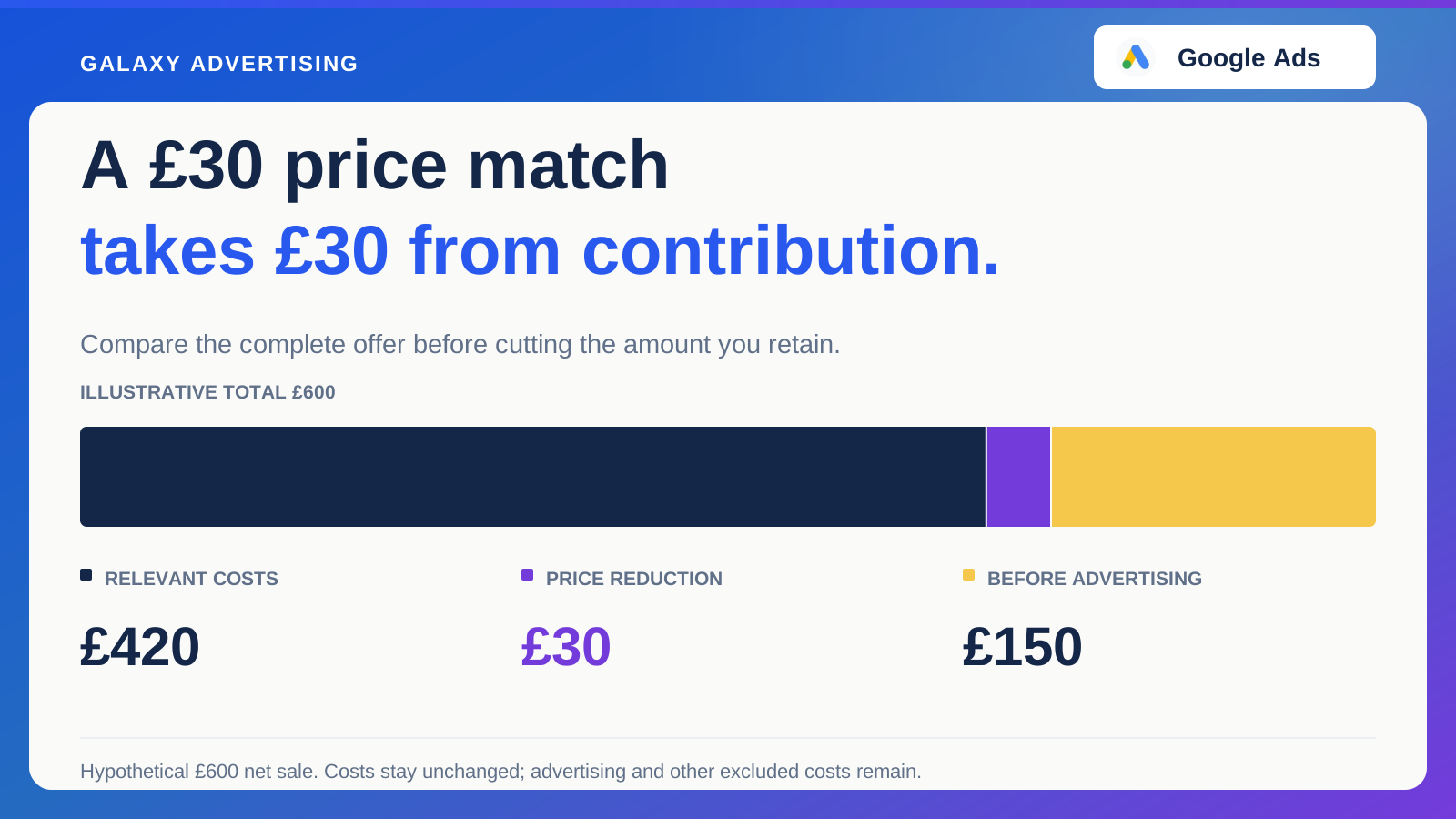
Use this hypothetical example. You're considering a £600 net sale with £420 of relevant variable costs, meaning the costs that change when you take the order. That leaves £180 before advertising and other costs excluded from this calculation.
Now imagine agreeing a £30 reduction in revenue while those costs stay unchanged. You have £150 left on that basis. The contribution, the money remaining after those relevant costs, has fallen by one sixth. The price reduction was only five per cent of the original revenue.
That is why a discount can feel small to the customer and rather larger inside the business.
The example doesn't tell you the right price. It shows why a modest reduction can require a material change in volume or acquisition efficiency. Calculate the effect using your agreed cost basis before expecting advertising to make up the difference.
Is price actually the obstacle?
A competitive price won't fix missing product information, an unavailable configuration or unclear delivery charges. Inspect those parts of the buying route before deciding someone rejected the offer solely because of price.
Look at customer questions and the behaviour you can observe after a visit. These can suggest plausible explanations. They don't reveal why every departing shopper left.
If an equivalent offer is genuinely more competitive on price, your advertising manager should say so. Campaign optimisation can't indefinitely create a commercial advantage you don't possess. The decision might belong in pricing or product selection rather than another bid adjustment. That's useful advice, even when it isn't the answer anybody wanted from the account review.
Put the genuine difference where people need it
If you have a meaningful product or service distinction, connect it to the buying decision. Explain the actual delivery assistance, verified package contents or relevant support route. Repeating “quality” won't help someone understand what they receive.
Keep that explanation consistent from listing to destination to checkout. A listing format won't accommodate every detail. The destination should still make the proposition clear without a support enquiry for basic information.
Keep promotional wording out of product data where it doesn't belong. Check Google's current product data guidance for representing factual attributes, and use appropriate creative and page content for broader persuasion. Good information needs to appear in the right place as well as say the right thing.
If you change it, know what result would justify it
For a price or package test, state exactly what's changing and which outcome matters. Compare completed orders and the contribution they leave, rather than stopping at how often people click or how many orders arrive.
More sales can leave less useful contribution when the incentive is expensive. A business with constrained fulfilment capacity could prefer fewer orders that each contribute more. Decide what suits your circumstances before celebrating the busiest outcome.
Record availability, investment and traffic mix changes. If several things move together, don't give price the whole explanation. A bounded test tells you more than a permanent discount introduced without a rule for deciding whether it worked.
Give the buying team something they can verify
Build a short comparison sheet covering precise model, configuration, availability, package contents and material service conditions. Add the source for each observation. Leave uncertain details marked unresolved.
Ask your product or operations owner to verify your side before using it to justify pricing. If the competitor information doesn't establish equivalence, keep the conclusion limited. This sheet helps an internal decision. It doesn't license public allegations about another business.
Then calculate the proposed response using your actual costs. Would matching preserve the contribution you need, or would another product deserve the emphasis? If you choose to explain a genuine service difference, identify where that explanation belongs on the destination.
You've now moved beyond reacting to one visible number. You're reviewing the offer someone can buy and the result you're prepared to support.
Sometimes the better choice is another offer
Some products aren't worth promoting at the cost of winning the visible price contest. You can choose a different product, configuration or customer need instead.
That's a strategic decision. Advertising should support the commercial priorities of the business, including its need to retain enough to operate.
A lower competitor price deserves investigation. It doesn't deserve automatic obedience. The offer you put forward needs to be both honest enough for a customer to compare and worthwhile enough for your business to deliver.