We sometimes ask a phrase like excellent customer care to justify a higher appliance price, then leave the actual service out of the explanation. The shopper sees the extra cost perfectly well. What they cannot see is what they would receive for it.
Picture two retailers advertising the same appliance. One has a documented additional service, but its campaign offers only general praise. Your service proposition needs to make the arrangement inspectable, separating the product from your contribution and showing the conditions. A warm tone helps. It cannot do that job on its own.
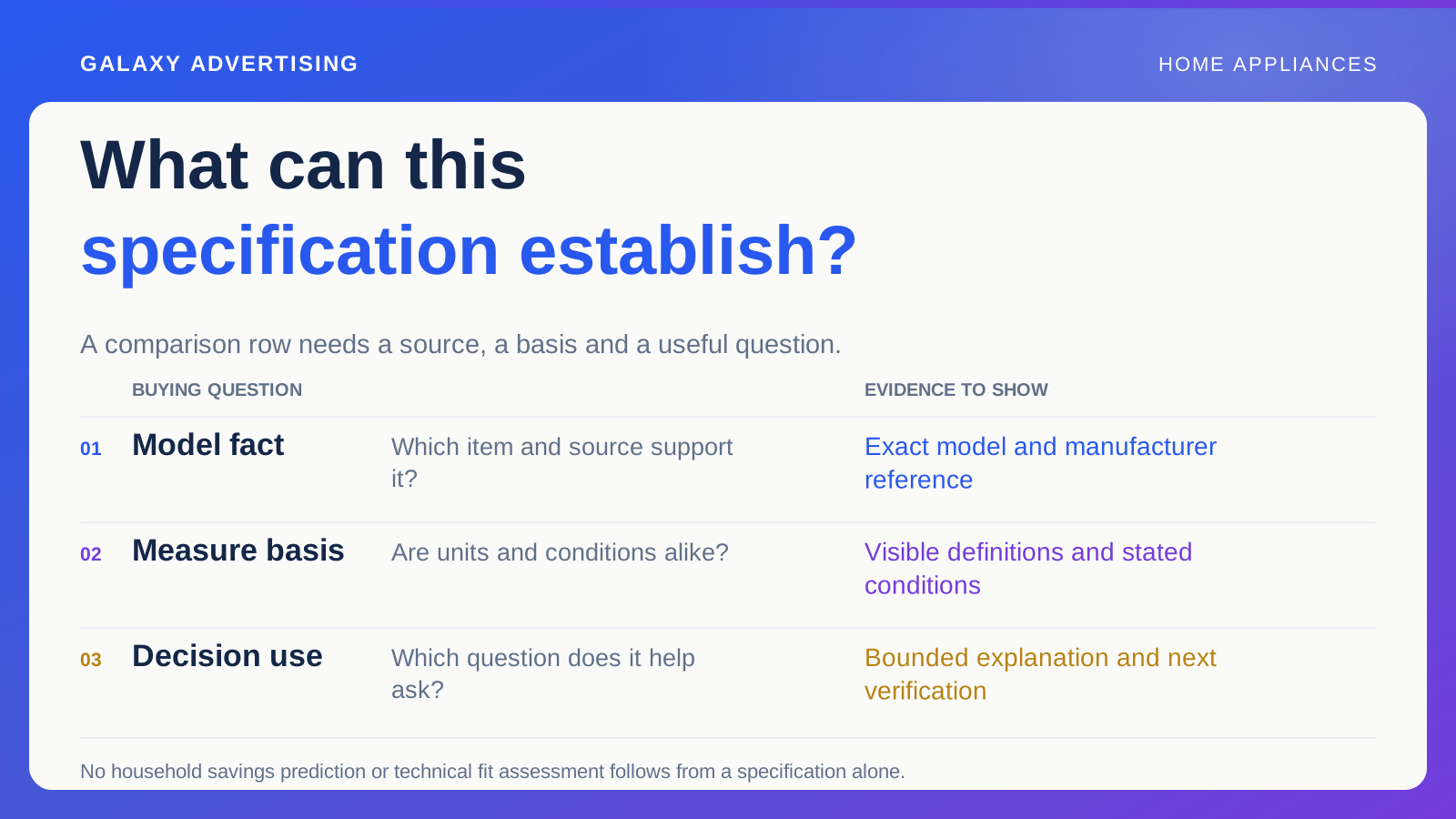
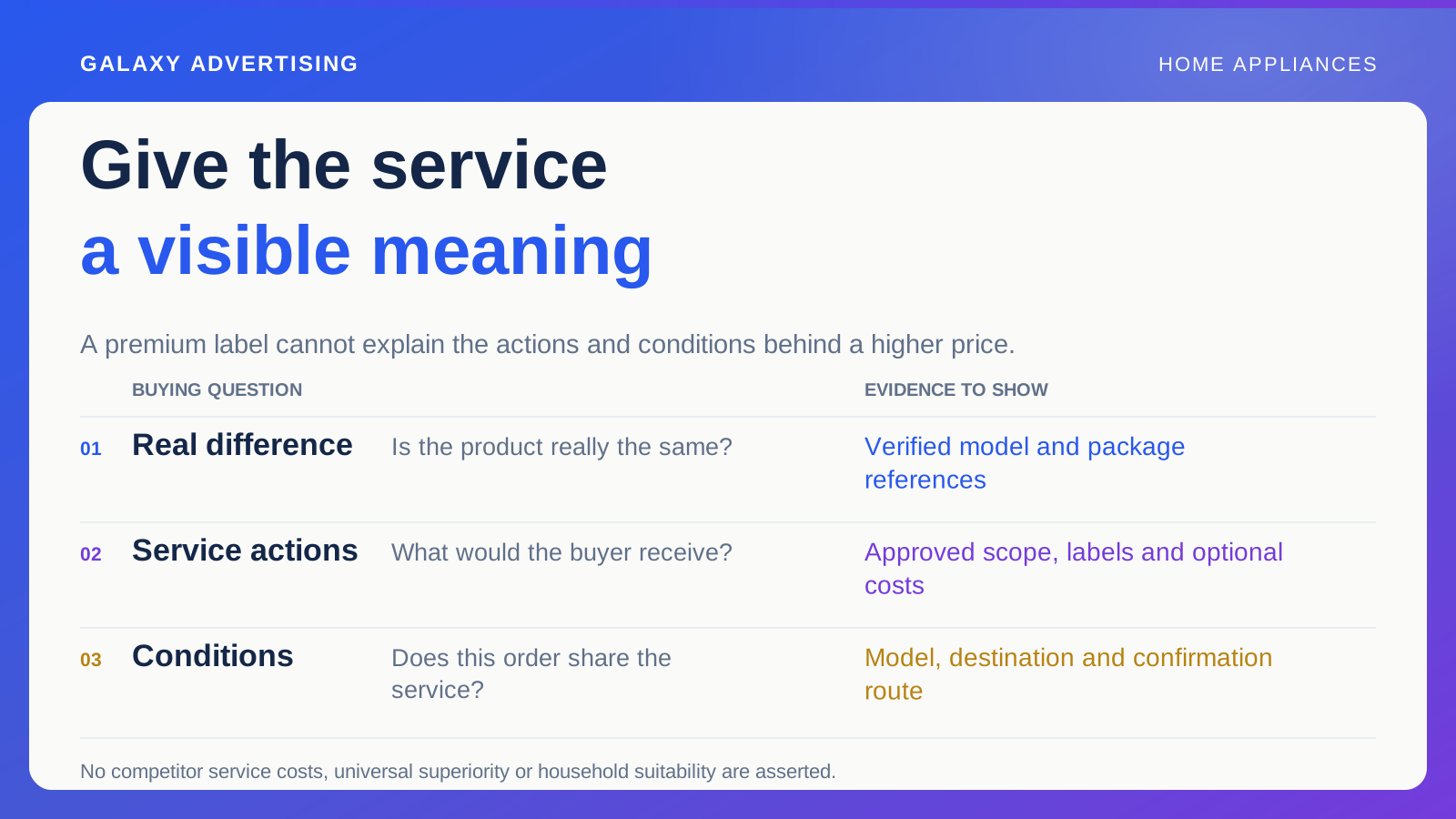
First check whether it is the same product
Confirm the model and package before comparing retailers. Similar names can disguise another version or different included items. The promotional photograph may make a comparison look simpler than it actually is.
If the model is identical, do not imply that your retailer has a unique construction advantage to justify the price. The difference might be availability, your service or another documented part of the purchase route.
Stay with facts the business can verify. You are helping a suitable customer understand a meaningful difference and decide whether it matters in their circumstances. You do not need to establish that your offer is universally better. That is a much bigger claim than this comparison can support.
Say what the service actually involves
Ask operations to describe the actions included and where they stop. Delivery to a particular point, a separately offered service and follow up support are different parts of an arrangement. Give each its proper label.
Use ordinary language. A premium badge saves space, but it still leaves the customer guessing what the retailer will do and what falls outside the offer.
Keep the explanation separate from improvised technical instructions for the household. Some orders need assessment specific to the model or qualified work. Point people towards the relevant information and responsible person in those cases. Your marketing can explain the service accurately without trying to replace professional guidance with a more persuasive script.
Keep the conditions beside the promise
Establish which models, destinations and order circumstances share the arrangement you are showing. Your strongest service description might be true for one part of the range. That does not give it permission to represent the entire catalogue.
Place the route to relevant conditions close to the offer. A material exception should not be something the customer discovers only after spending time working through the purchase.
Where an individual order needs confirmation, explain how to get it. Conditional wording can still be useful and persuasive when it gives somebody a sensible next step. It is better to reach the right source for an answer than rely on an unconditional promise your team might later have to withdraw.
Compare prices on a clear basis
Show what the quoted offer includes and separate optional costs. A product only price and a package price are different quantities. Presenting them as equivalent makes the supposed explanation harder to follow.
In a hypothetical comparison, you could separate the appliance, the described delivery arrangement and an optional service. You do not need to give each a universal value. A customer who already has a suitable arrangement might reasonably prefer a different offer.
Do not invent a competitor's service costs or assume what it excludes. Use supportable facts and identify comparisons clearly. Explaining your own arrangement properly makes a more credible proposition than asking the customer to accept an unverifiable criticism of somebody else's.
Let the evidence show the same service
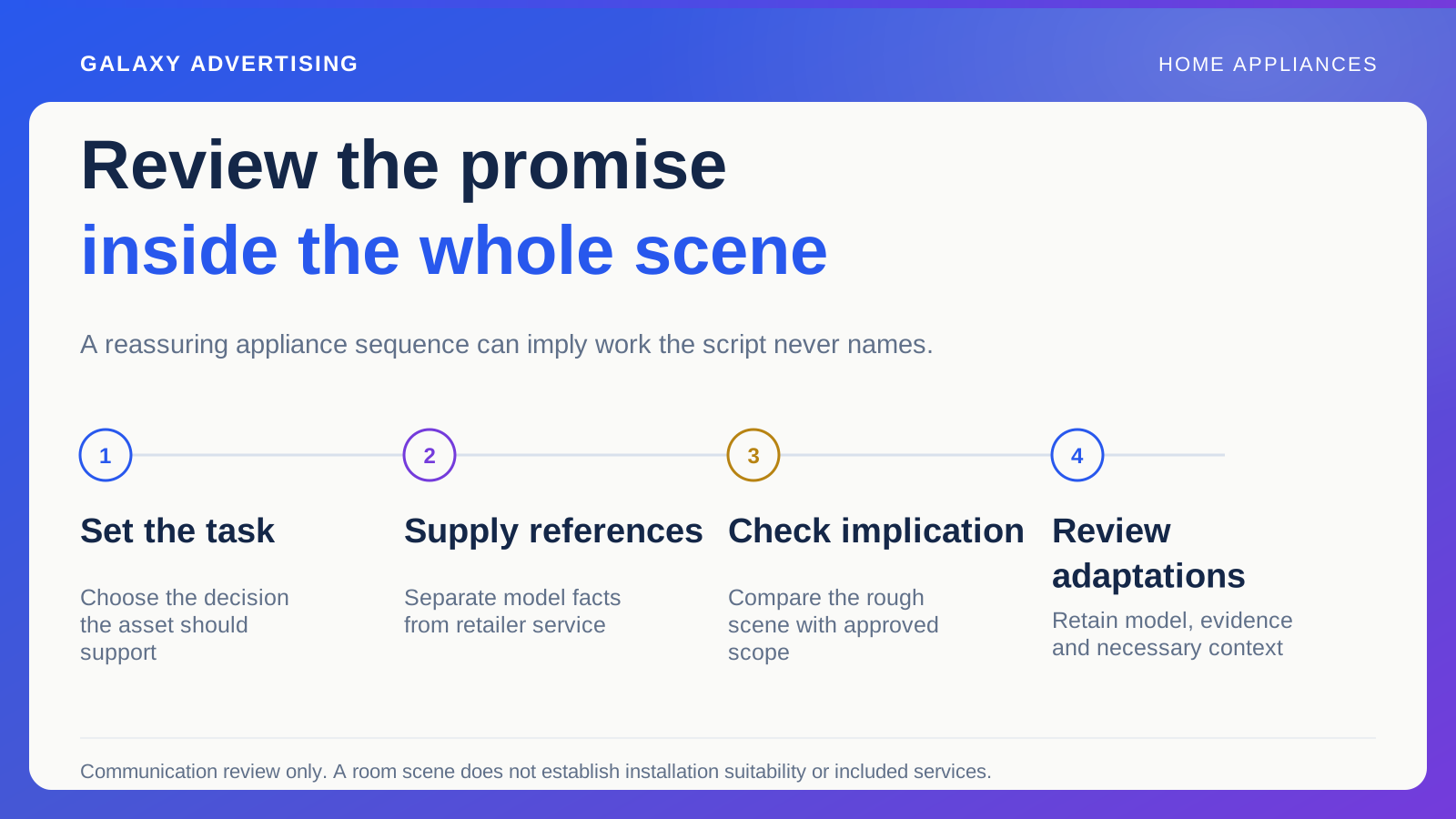
Use accurate operational information and suitable imagery. A friendly person standing next to an appliance may look reassuring, but that photograph does not establish what your delivery arrangement includes.
If footage shows part of the service, check it against the documented offer. Does it suggest additional work? Ask the product and operations owners to review the important visual implications as carefully as the spoken copy.
Customer accounts can provide context where they describe the actual purchase and keep relevant conditions intact. One person's positive experience is not a guarantee for everyone. Keep testimony within what that person can establish, instead of stretching it across every service claim in the campaign. The evidence should support the promise you are making.
Carry the explanation onto the page
Send people to the relevant model or a clearly defined offer. Make service information easy to identify there. An advert can explain your difference well, only for the destination to replace all that clarity with another vague premium badge.
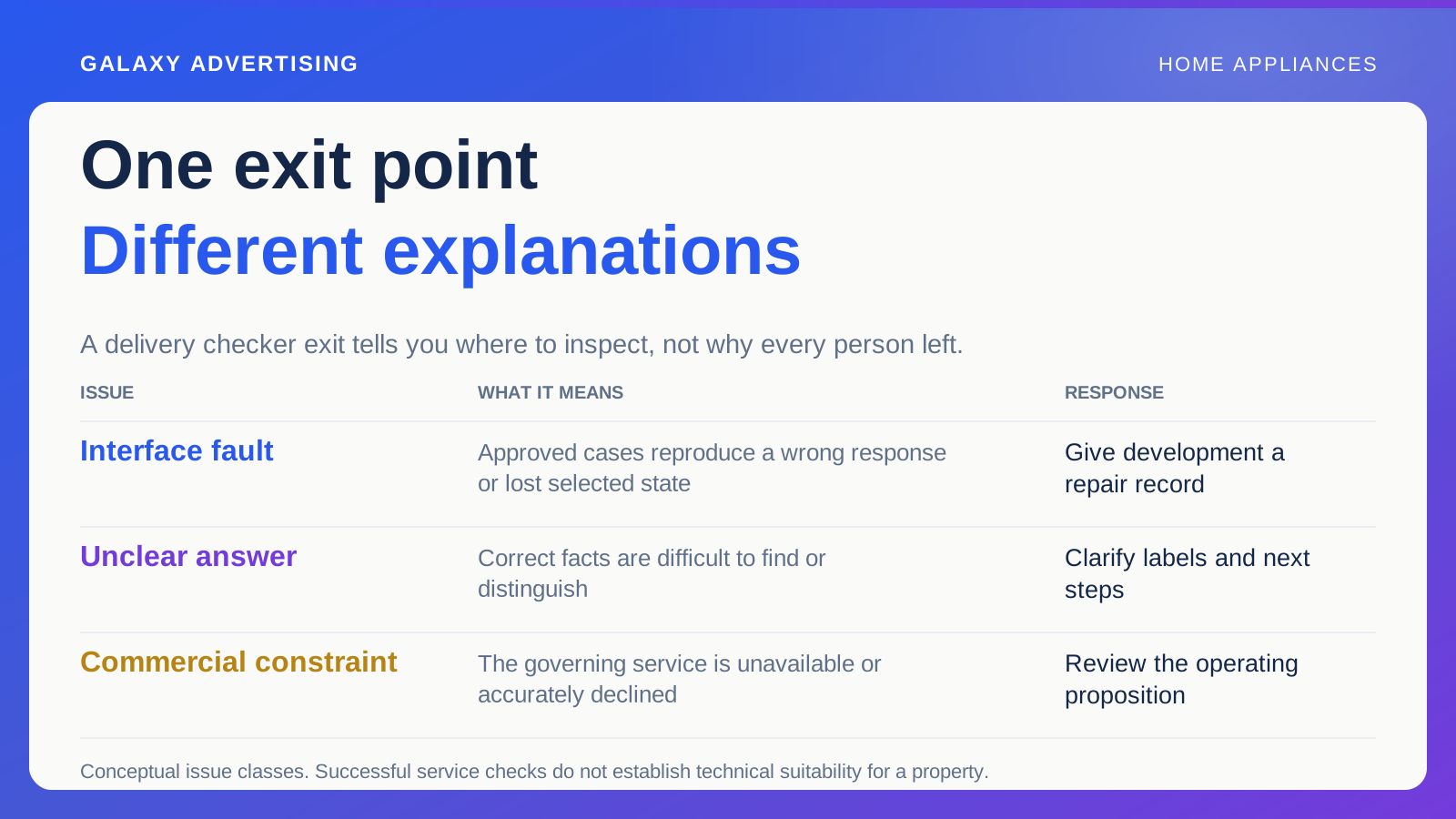
Check what happens when optional selections change. Can the shopper understand the displayed total and what it contains? They should know whether they have selected the service shown in the advert or a different arrangement.
Follow the route on a phone. Then ask somebody unfamiliar with it to explain what they believe is included. Compare that answer with the operational record. If they disagree, revise the presentation. Familiar wording does not ensure that a new customer will interpret it as intended.
Keep a brief approval record connecting the service claim, its operational source and the final asset version. When the arrangement changes, this helps you identify messages needing review. Otherwise a help page may be updated while an older advert continues making a stronger promise.
This record belongs behind the scenes. Customers do not need extra production notes to read. Your team needs the connection so it can communicate a real distinction efficiently and keep the words attached to the service supporting them.
Look for suitable orders, not just attention
Review enquiries and completed orders alongside campaign reporting. Are people asking about the service you actually provide? Does the resulting order mix leave worthwhile contribution, the money remaining after the relevant costs in your calculation?
Attention alone does not establish commercial success. Equally, a specific eligibility question can be a useful step towards an informed order. It is not automatically evidence that the creative failed.
Use what you learn to refine the offer presentation and next brief. A genuine service difference gives you a professional reason for the attached price when it is relevant, accurate and understandable. The customer's part is deciding whether that difference is worth paying for in their own home.