 Google Ads
Are you paying for customers who were already on their way to your shop?
It's a fair question when your brand campaign reports inexpensive orders and an impressive return. Someone calls it the star of the account. Someone else wants it switched off. The report, on its own, doesn't settle either argument.
The decision is about what the paid presence does in the circumstances your customers actually face, and what evidence justifies the money you put behind it.
Whose brand were they looking for?
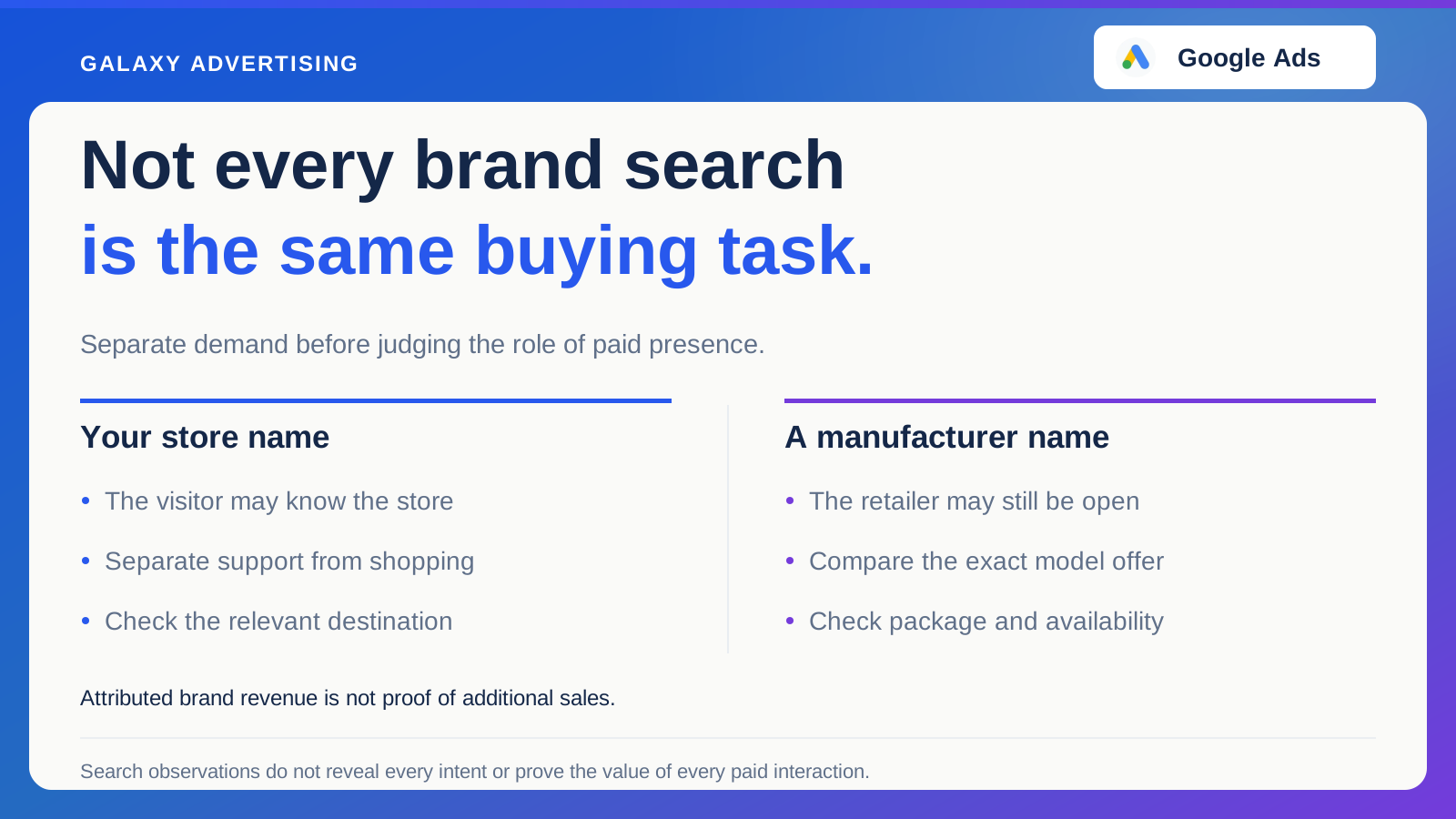
Start by separating searches for your store's name from searches for manufacturers or product brands you stock. Someone typing your name could already intend to visit. Someone typing a manufacturer's name could still be comparing authorised retailers.
Those aren't interchangeable buying situations. Treating them as one makes it harder to decide what deserves investment.
Look for service tasks as well: tracking an order, contacting support or finding out how to return something. These visits can have a legitimate purpose. But a paid interaction before a support visit doesn't turn it into new customer acquisition.
Make a small classification of observed searches and keep examples. Be honest about what you can see. The report doesn't reveal every customer's intention or every search in complete detail. A useful classification is better than an elaborate claim to know what everyone was thinking.
What would the customer see without the ad?
Look at the actual results when someone searches for your store. Check the organic destination, how clearly your brand appears and what commercial information is visible. Note competing results and whether they matter to the decision you're investigating.
An organic result doesn't prove the paid placement adds nothing. A competitor's presence doesn't give defensive spending a blank cheque either. You're establishing the setting for a sensible test or investment decision.
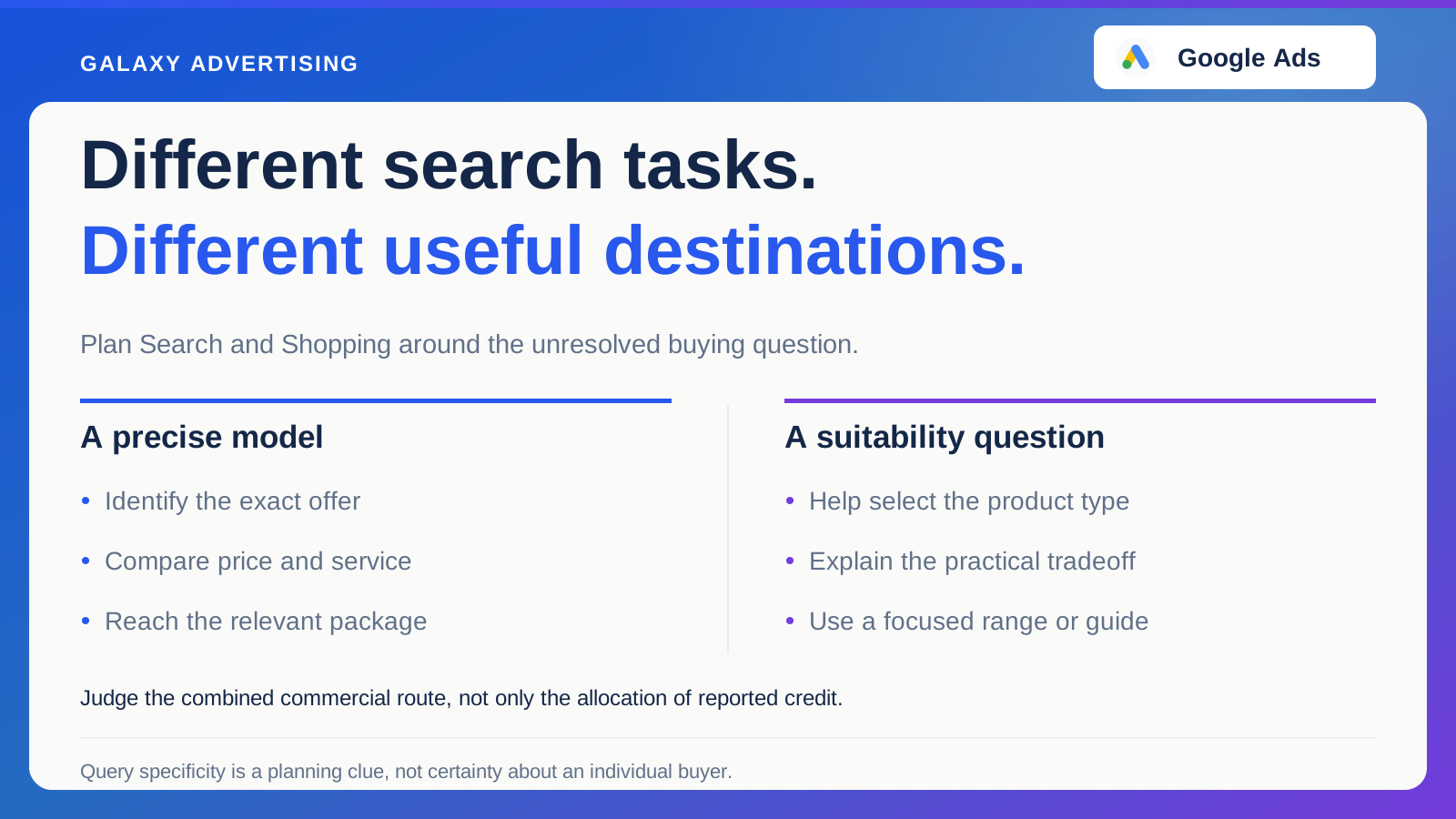
Check where the visitor lands too. Someone searching for a particular product within your store doesn't necessarily need the same destination as someone simply looking for the shop. That distinction matters because the customer still has a task to finish after the click.
Can you see brand activity clearly across the account?
Review how your own brand appears across the campaign types you use. A strong existing demand component can disappear into an account average alongside broader product discovery. You then risk treating unlike activities as though they answer the same question.
Google provides brand controls for relevant Search and Performance Max setups. Before suggesting a change, check its current documentation and the settings actually available in your account. Understand what the control affects. Its name isn't a guarantee of the customer mix you'll get.
Write down why you're separating or excluding activity. The purpose is a clearer operating decision. Rearranging a report so another campaign looks better or worse doesn't pay for much.
Decide what you're trying to find out
You could ask whether a particular level of brand investment contributes to total suitable orders in a defined setting. Or you could ask whether a more relevant destination is worth using for brand visitors.
Different questions. Different tests.
Don't change several brand settings, launch a promotion and redesign the landing page together, then give paid presence all the credit or blame. Record what needs to remain comparable and what differences you can't avoid. Otherwise, the outcome becomes surprisingly easy to explain in whichever way somebody prefers.
A properly controlled experiment isn't always available or practical. A bounded observation can still help, provided you explain its weaknesses. A simple before and after comparison can inform a decision without proving that additional sales were created.
Follow the orders beyond the advertising report
Suppose attributed paid brand orders fall after a change, while comparable total brand related sales stay stable. That raises a question about orders moving between routes. It doesn't deliver a universal verdict for every future period.
If total orders fall, look for other explanations: stock, price, organic visibility, technical faults or changes elsewhere in your marketing. Two movements happening at the same time don't establish that the campaign was indispensable.
Use the same definitions of orders and revenue throughout. If one view includes cancellations and another excludes them, the story about who deserves credit can sound convincing while resting on a mismatch. Settle that before changing the spending policy.
Remember what happened before the search
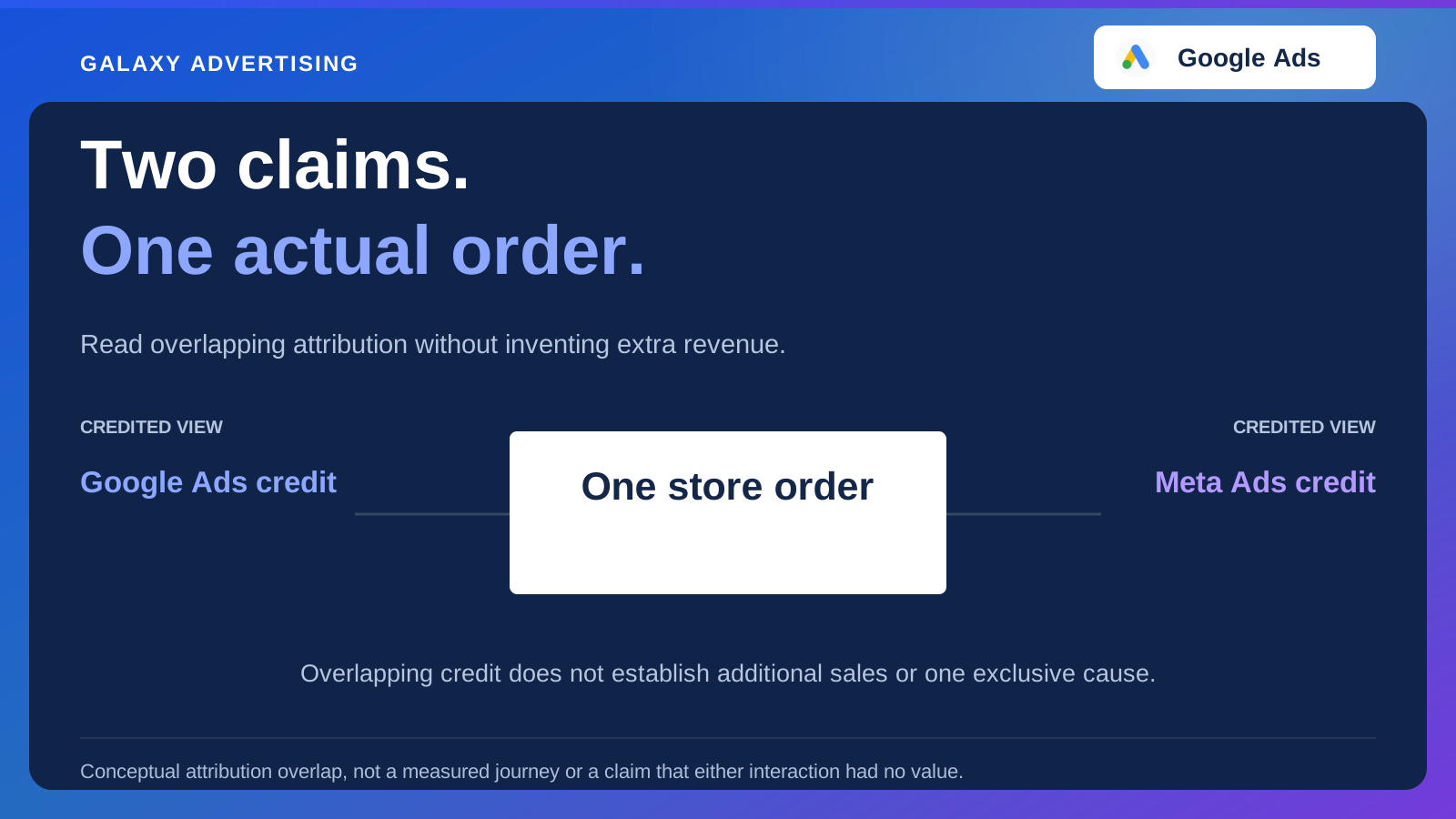
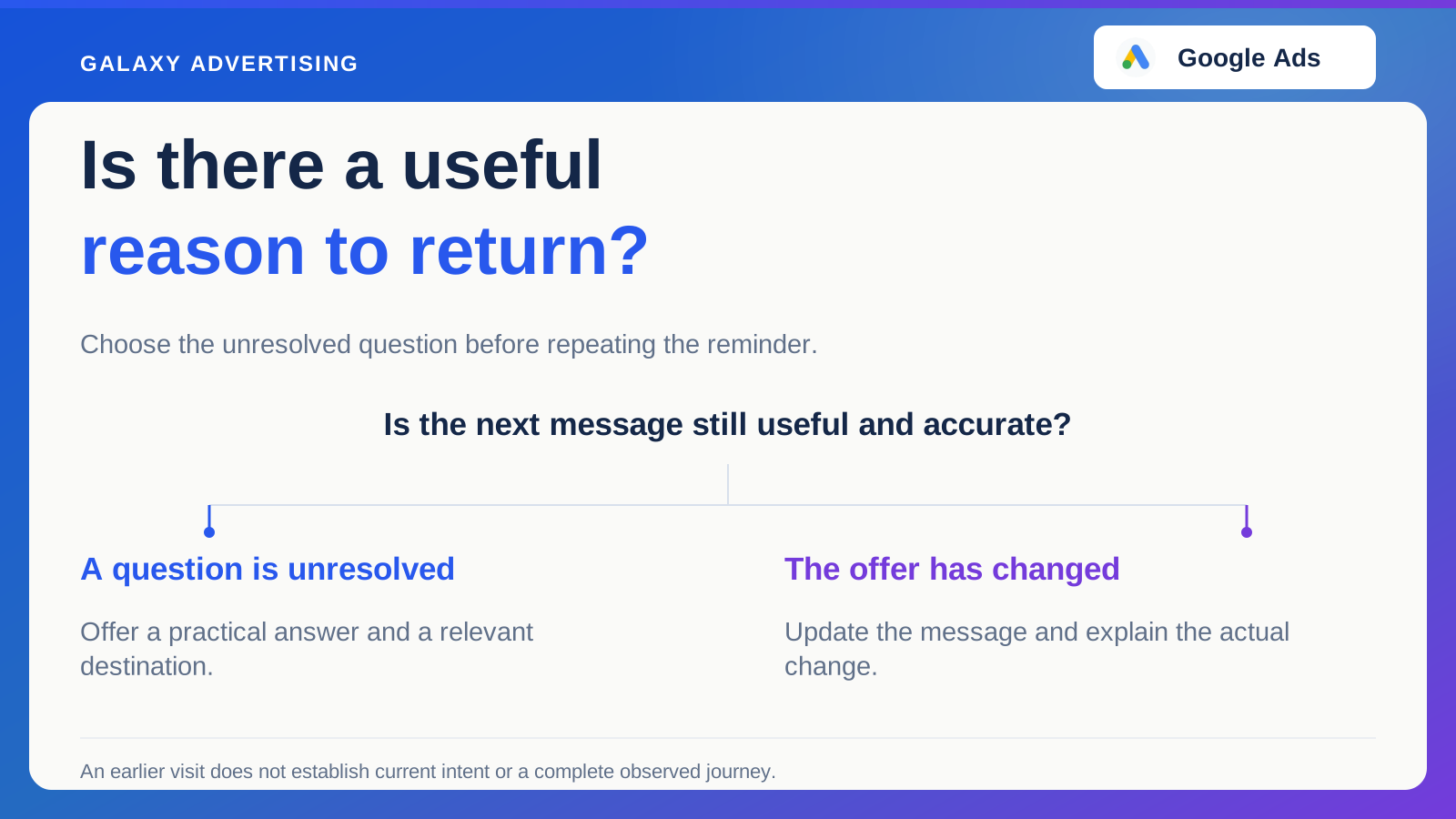
A shopper could discover your name through Meta, a recommendation, an email or earlier browsing, then search for you. The brand campaign captures the final action. Something else helped form the preference.
That's why a high branded return on ad spend, the revenue attributed to each pound of advertising spend, doesn't show you can achieve the same efficiency with unfamiliar audiences. It describes the activity being credited. It doesn't promise an endless queue of equally ready customers.
Prior influence doesn't make the final paid interaction worthless either. You need a proportionate view of its role, rather than an argument in which every order has to belong exclusively to one channel.
Put a disputed search on the table
Choose a real query category that causes disagreement, such as a manufacturer name alongside a specific model. Ask what the shopper has already decided and what remains open. Inspect your actual offer: availability, package, price and destination.
You might discover you're discussing competition for a known product rather than your own brand at all.
Then examine an own name query separately. Is this person looking for the store, a product within it or help with an existing transaction? The words won't reveal everything. They will stop several kinds of demand being bundled under a convenient label.
Record the proposed response and the evidence needed to revisit it. If that response involves a control or exclusion, verify its scope in the current account. You want a reasoned policy for that demand, rather than a blanket order to increase or eliminate branded traffic.
Leave the team with a policy they can explain
Record the searches you intend to serve, the destination, why the investment is justified and what evidence would change your mind. Include a route for operational issues, such as a missing organic result or an unavailable promoted offer.
Revisit it when the competitive or commercial circumstances change. An earlier test stops being a useful guide when the conditions behind it no longer apply.
Your brand name on an advertising report is a starting point for judgement, not a verdict. The useful policy is one you can explain today and reconsider when the evidence changes.