 Google Ads
A visitor looking at your table isn't necessarily a buyer waiting for enough reminders.
They checked the dimensions and left. Your next message shows the same room photograph and asks them to buy. That reminder could be relevant. It could also leave the very question that stopped them completely unanswered.
A longer buying journey gives you an opportunity to help someone continue their research. It doesn't justify showing every former visitor the same message for as long as the system permits.
What did that visit actually tell you?
A product visit records an interaction. It doesn't tell you everything about the person's intention. They could be measuring a room, comparing alternatives, helping someone else or deciding the item isn't suitable.
Don't describe an audience as certain buyers because it meets a technical rule. Use the action you observed to form a plausible question about what information would help next. That keeps the plan relevant without pretending to know more than you do.
Check the audience and measurement options actually available in your account, alongside permissions and current platform capabilities. Otherwise, you risk designing a beautifully detailed sequence around stages you cannot reliably observe or address.
What still needs answering?
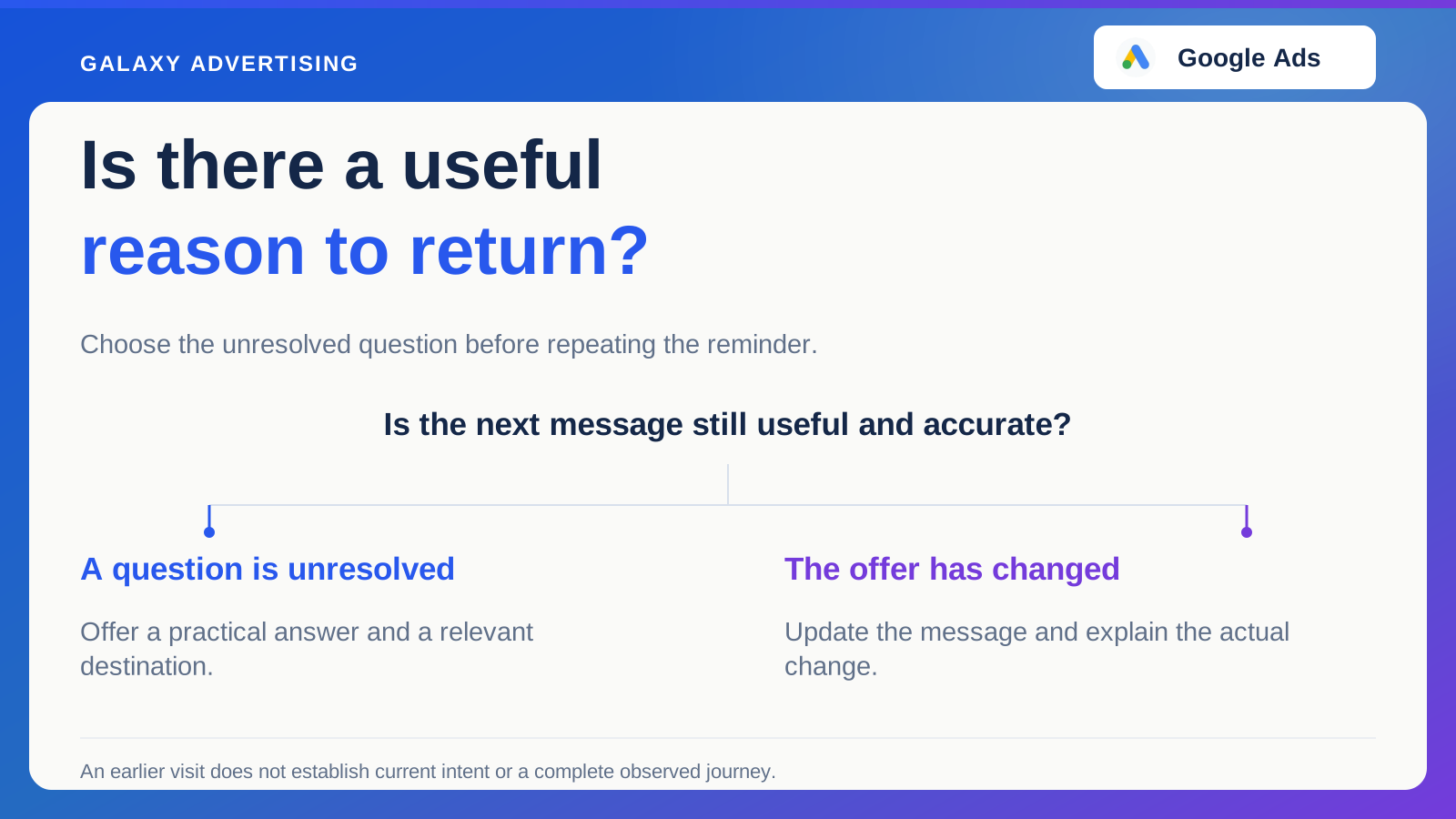
For a dining table, useful follow up subjects could include extension arrangements, material care, delivery assistance or comparing dimensions. Choose questions you can answer accurately and that belong to the offer someone is reconsidering.
A discount makes a different argument. It could be commercially appropriate in a defined setting. It shouldn't become the automatic answer to uncertainty about suitability. Less expensive doesn't tell somebody whether the table will work in the room.
Make that distinction clear in the creative brief. A product reminder, a practical explanation and a genuinely new offer have different jobs. You'll need different evidence to judge them, rather than treating every reason to return as interchangeable.
Leave room for what the system cannot know
Someone could return on another device or buy through a route that isn't fully connected to your advertising records. Another visitor could keep researching without ever becoming a suitable buyer.
Plan with those limits in mind. Avoid wording that suggests personal knowledge you don't have, such as certainty that somebody still wants a particular item. You can offer a useful answer without sounding as though you've been standing behind their chair.
Review how completed customer actions should affect the programme where the necessary information and permissions are available. Asking someone to buy the same product can become inappropriate after purchase, or after the offer materially changes. Keep those situations in the operating plan rather than assuming every earlier visit still means the same thing.
Make the next click reduce the work
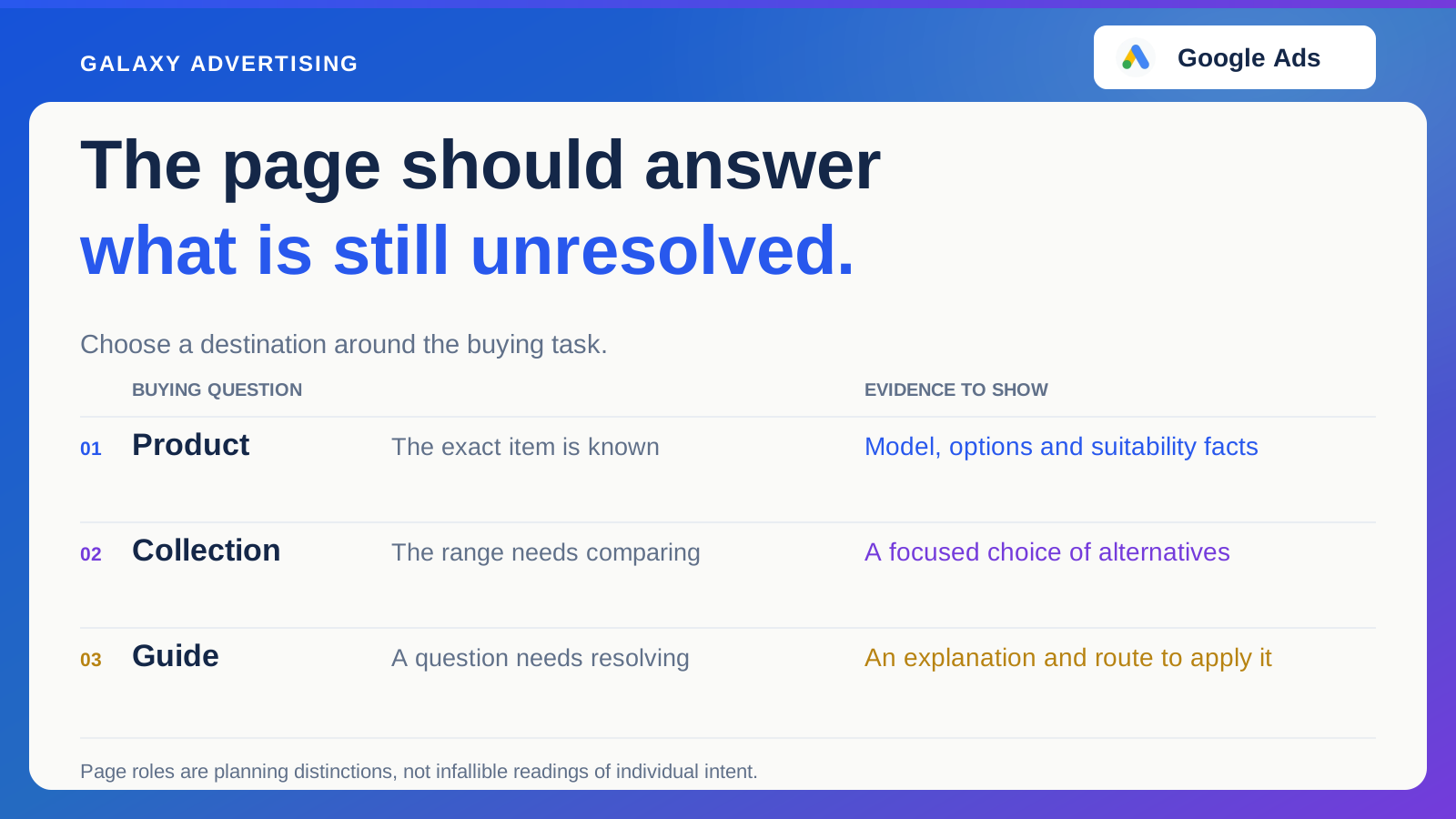
A message about a specific question should lead to the relevant answer or product configuration. Don't send somebody to the generic homepage and ask them to start again. The communication has raised an expectation about what they will find.
Check that the destination still represents the product, availability and commercial conditions being discussed. If the promoted finish has sold out, repeating the original asset could be misleading or simply unhelpful.
Stable references and clear navigation matter during longer consideration. People need to reconnect a saved idea with the current offer and understand important changes before deciding what to do. Help them pick up the thread instead of making them reconstruct it.
How long is there a useful reason to continue?
A longer operating window isn't automatically better. Consider the purchase process, relevance of the earlier interaction and cost of continuing under your actual account setup.
There's no universal number of days that suits every category. A replacement appliance question and a made to order furniture decision can be materially different. Even within a category, urgency and exploratory browsing aren't the same situation.
Record why your approach makes sense and what evidence would justify narrowing its scope, changing the message or ending the activity. This gives continued spending a business rationale rather than letting the system's available duration make the decision for you.
A return order isn't proof the reminder created it
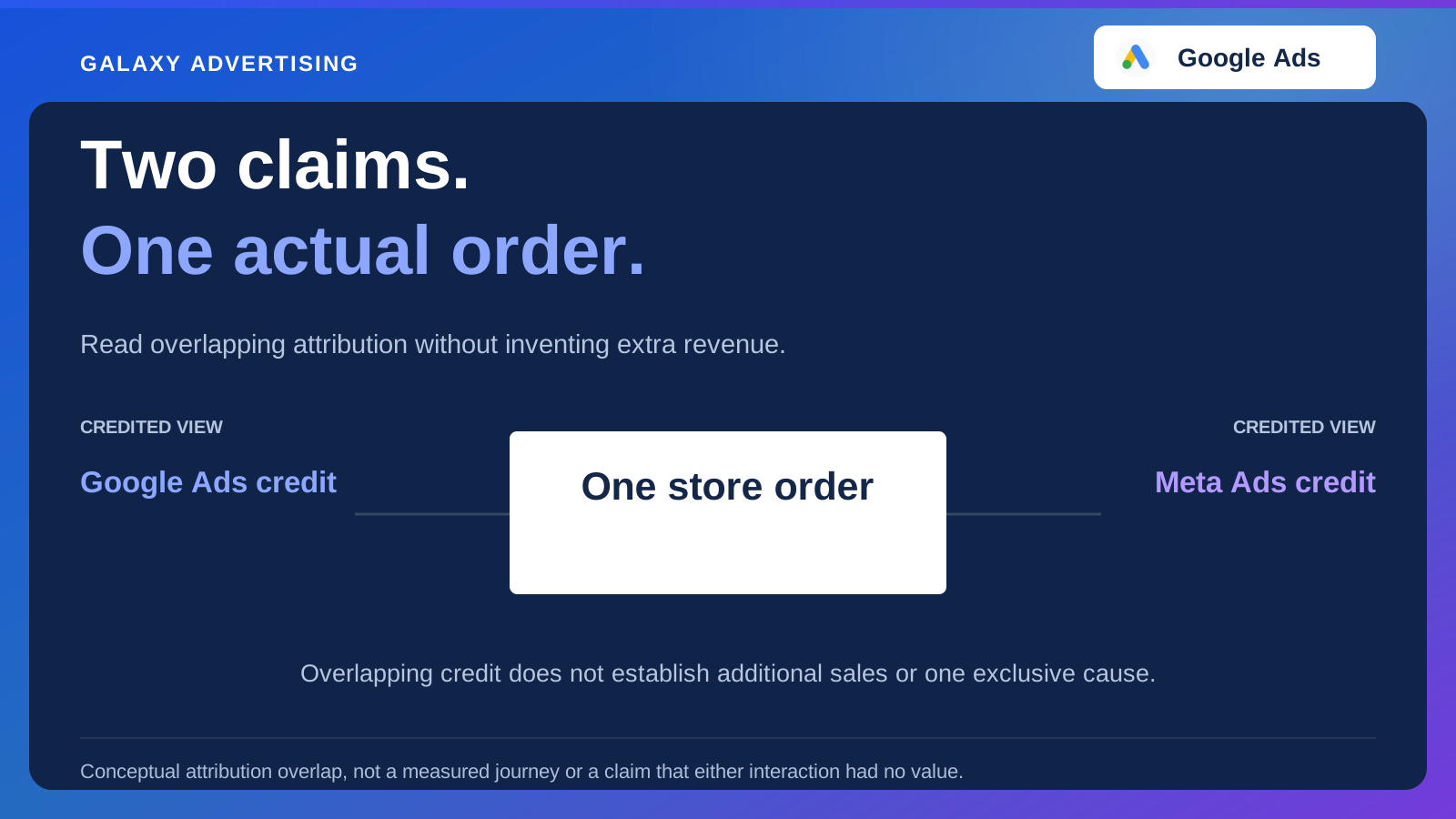
A customer could already have been close to buying before the follow up appeared. An attributed order, one the reporting rules connect to the message, is worth examining. It doesn't independently prove you created an additional sale.
Read available channel reporting beside total customer outcomes and the product's commercial conditions. Where a suitable test is practical, use it to investigate the disputed contribution. Neither perfect causality nor complete irrelevance should be the starting assumption.
Look at the questions and destinations too. Repeated returns to a compatibility guide could inform your information strategy even when you can't assign a precise share of revenue to it. A useful observation doesn't have to carry an exact revenue claim to deserve attention.
Test the route as a fresh customer task
Take one follow up argument, such as understanding an extending table's usable dimensions. Follow the message and check whether the answer is visible in the form you've implied.
If someone must search several unrelated pages, you've added research work. If the configuration is unavailable, explain that honestly and offer a relevant alternative where one exists. Don't leave the original message promising a route you can no longer provide.
Ask whether the same asset remains appropriate after purchase or another material relationship change. If the system can't reliably distinguish that situation, avoid wording that assumes it can. Record those limits with the plan.
The standard is a plausible next step for a suitable visitor, supported by an accurate destination and a commercial reason to continue. It needs to work with the information you actually have, rather than an imagined complete account of the person.
Change the reason to return when the question changes
If you've repeated one argument extensively, develop another useful response to the buyer's uncertainty. A different border colour or background doesn't necessarily give them a new reason to reconsider.
Keep factual consistency and the required approvals as you change the message. Being more persuasive still means describing what your business can deliver.
Earlier interest and a current decision are different things. Your follow up should make it easier for a suitable buyer to continue, rather than making your business impossible to escape because they once opened a page.