 Google Ads
An illustrative £900 product order can appear differently in your reports without a sale having gone missing.
You're looking at the order and trying to understand why advertising, analytics and the store all show different totals. Each team defends its own source. You still need an explanation you can use to run the business.
Start below the headline. Find out what each system counts and how the transaction reaches it, rather than forcing totals to agree when they answer different questions.
Agree what each number is supposed to mean
For every source, record the action being reported, its value basis and the relevant reporting rules. Does it include tax, delivery income, cancellations or refunds? How does the reporting period relate to the activity recorded?
Distinguish store revenue from revenue attributed to an advertising route, meaning the revenue its reporting rules give that route credit for. Similar dashboard labels don't make those the same measure.
If a definition remains uncertain, ask the implementation owner to explain it. A column name is a poor substitute for knowing how the data was produced. Guessing here can send the investigation towards the wrong problem before you've inspected an order.
Choose orders that help explain the difference
Take a manageable sample, including apparent matches and orders responsible for a material discrepancy. Record the stable identifiers available in the relevant systems so you can follow the same transaction throughout.
Don't select only the favourable or unusually straightforward cases. Include a cancellation, discounted order or another relevant exception where it matters to the disagreement. Those are often exactly the conditions the investigation needs to understand.
Keep the sample's purpose clear. You're diagnosing how a difference happens. You aren't establishing that every order behaves identically. That limit matters before somebody turns a small inspection into a claim about the whole account.
Follow the amount, not just the recorded action
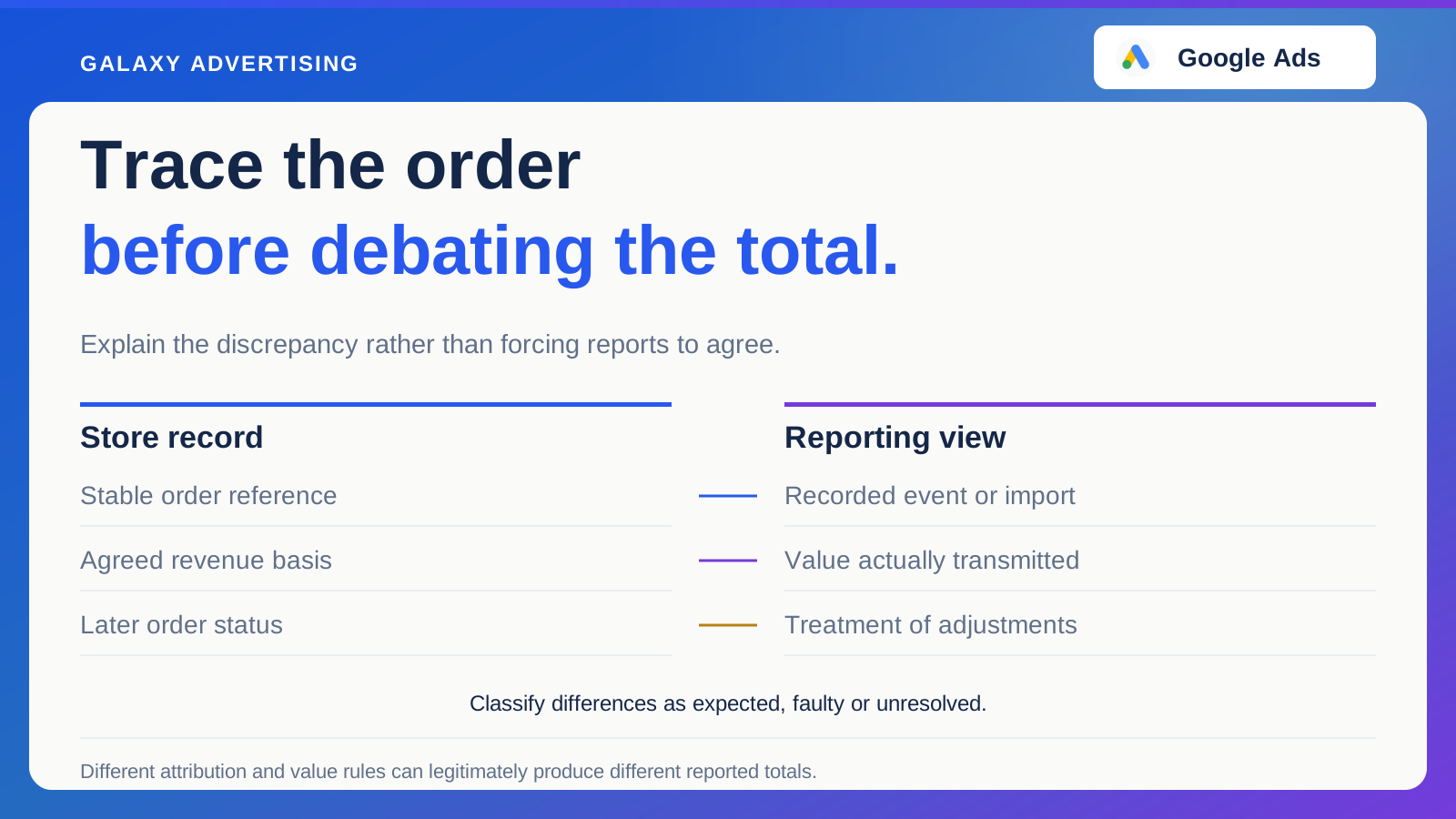
Trace what the customer bought, its order value, the information sent by the implementation and the amount each report displays. Recording an event once doesn't ensure its commercial basis matches the store revenue total.
Take that hypothetical £900 product order. As the owner inspecting it, you could find additional delivery income or a discount treated differently in another view. That would explain a disagreement without establishing that a sale was lost from the records.
If a value is clearly wrong, find its source. Don't manually adjust the final spreadsheet and leave the data route unchanged. The report might look tidier while the same fault continues to influence decisions elsewhere.
Has the same transaction arrived through several routes?
Check whether multiple measurement or import paths send the transaction to the advertising account. Similar names don't prove duplication. Different names don't prove the records are independent.
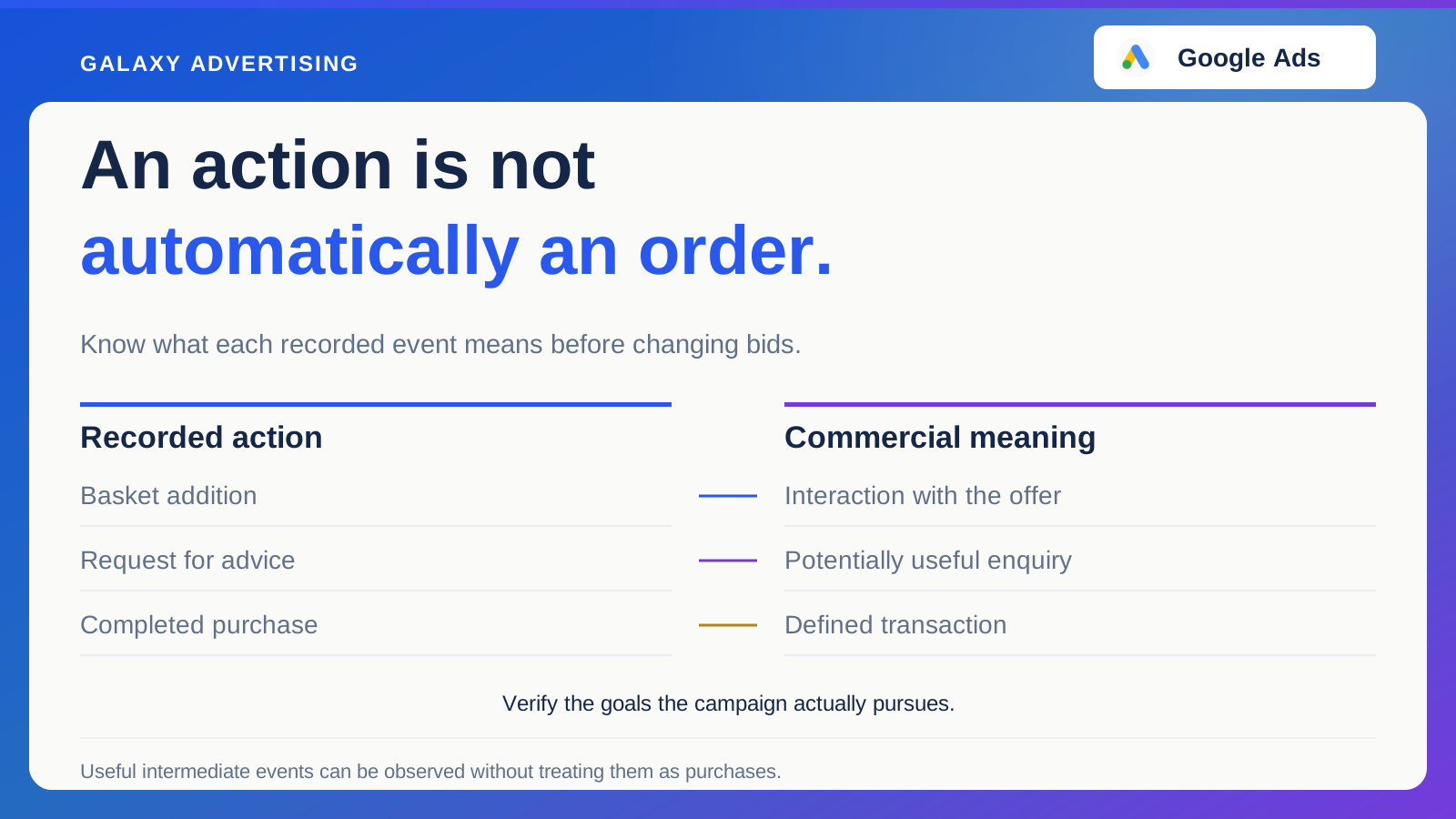
Confirm how the actual goal configuration uses those records. Work with both implementation and account owners before changing it. A technical event can help diagnose the journey without representing another purchase. Removing it based on a name could lose useful information without resolving the interpretation.
Keep a simple diagram or written route covering the order system, website measurement, analytics and advertising records involved. Following a concrete path is easier than trying to reconcile disconnected screenshots and everyone's recollection of how the setup works.
Is it a reporting rule or a fault?
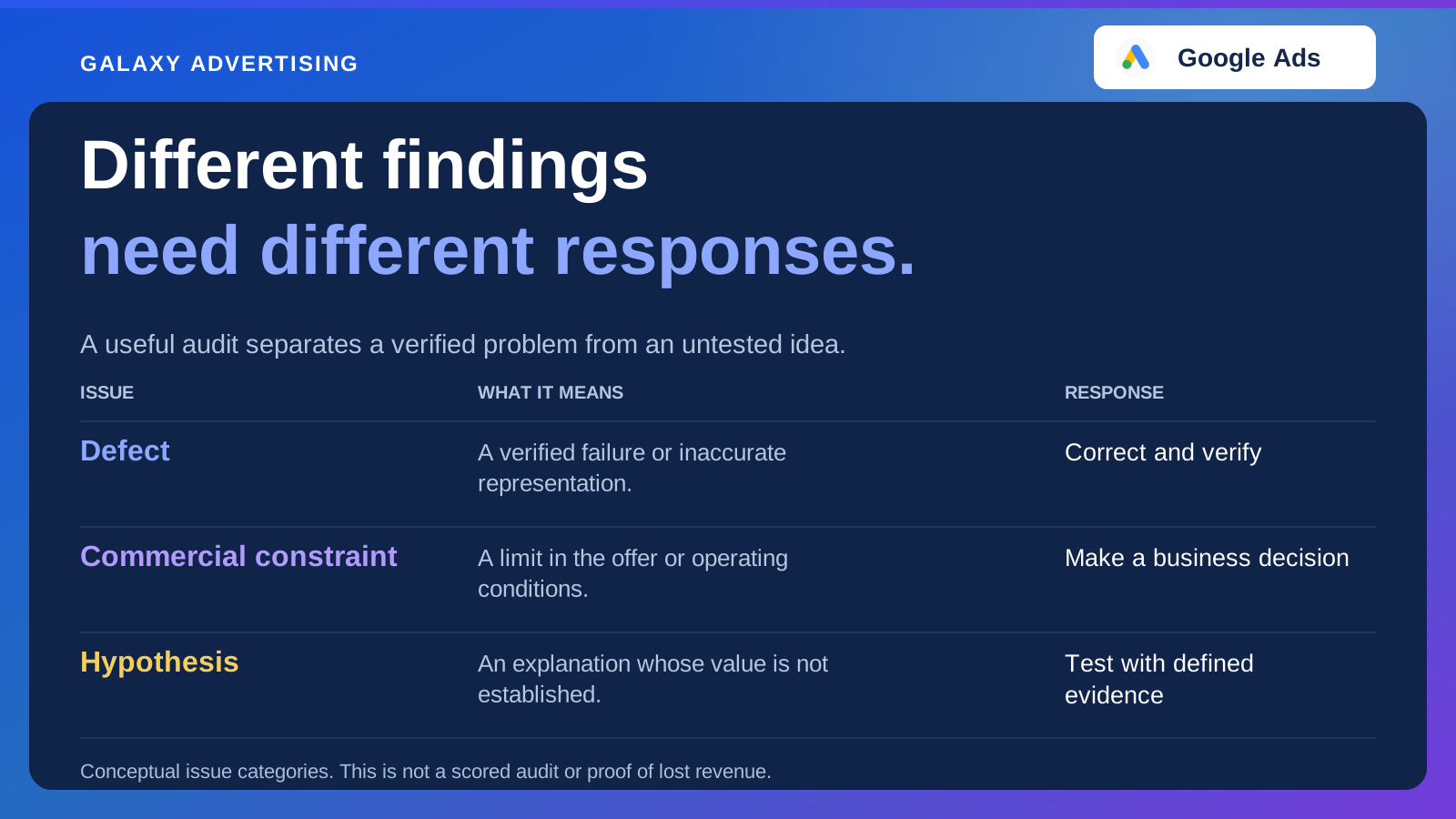
Different attribution rules can give different credited outcomes while the underlying transaction is still present. Investigate those rules before calling every mismatch broken tracking.
Actual implementation faults deserve direct attention. An event firing at the wrong stage, a missing value or an inconsistent identifier needs a specific description, a reproducible observation and an owner. That gives the person fixing it something testable to work with.
Don't use attribution complexity as a blanket explanation for totals nobody understands. Don't promise perfect equality where systems legitimately have different definitions and purposes either.
Both shortcuts make the meeting shorter. Neither makes the information more useful.
Which decisions are being affected?
Identify where the information is used. A management report, campaign optimisation goal and merchandising review could depend on it differently. Optimisation goals are the instructions directing what the campaign pursues, so an affected value there deserves particular scrutiny of its practical consequences.
Prioritise corrections by those consequences. An error materially changing values used for campaign decisions could need a different response from a minor presentation inconsistency in a secondary view. You want effort directed towards what actually changes an operating decision.
Record any break in comparability after correcting a definition or counting basis. A sudden reporting movement shouldn't imply that customers or campaign performance changed by the same amount when part of the explanation is the correction itself.
Put an explanation beside each discrepancy
For each sampled transaction, use a short table showing the store order reference, relevant recorded values, status and explanation. Mark a difference expected, faulty or unresolved only where the evidence supports that label.
“Different value basis” needs to identify the actual difference. Otherwise, it's just a way to stop asking. Give every unresolved mechanism an owner and the next information needed.
If several transactions share a verified cause, investigate its wider scope without manually narrating every order. If they differ, don't impose the first explanation on the rest. Keep the diagnostic sample separate from a claimed account wide correction until you've checked that wider effect.
Someone who didn't carry out the inspection should be able to review the table. Totals adjusted into agreement aren't enough if the mechanism behind the disagreement is still unknown.
Leave the business with an explanation it can use
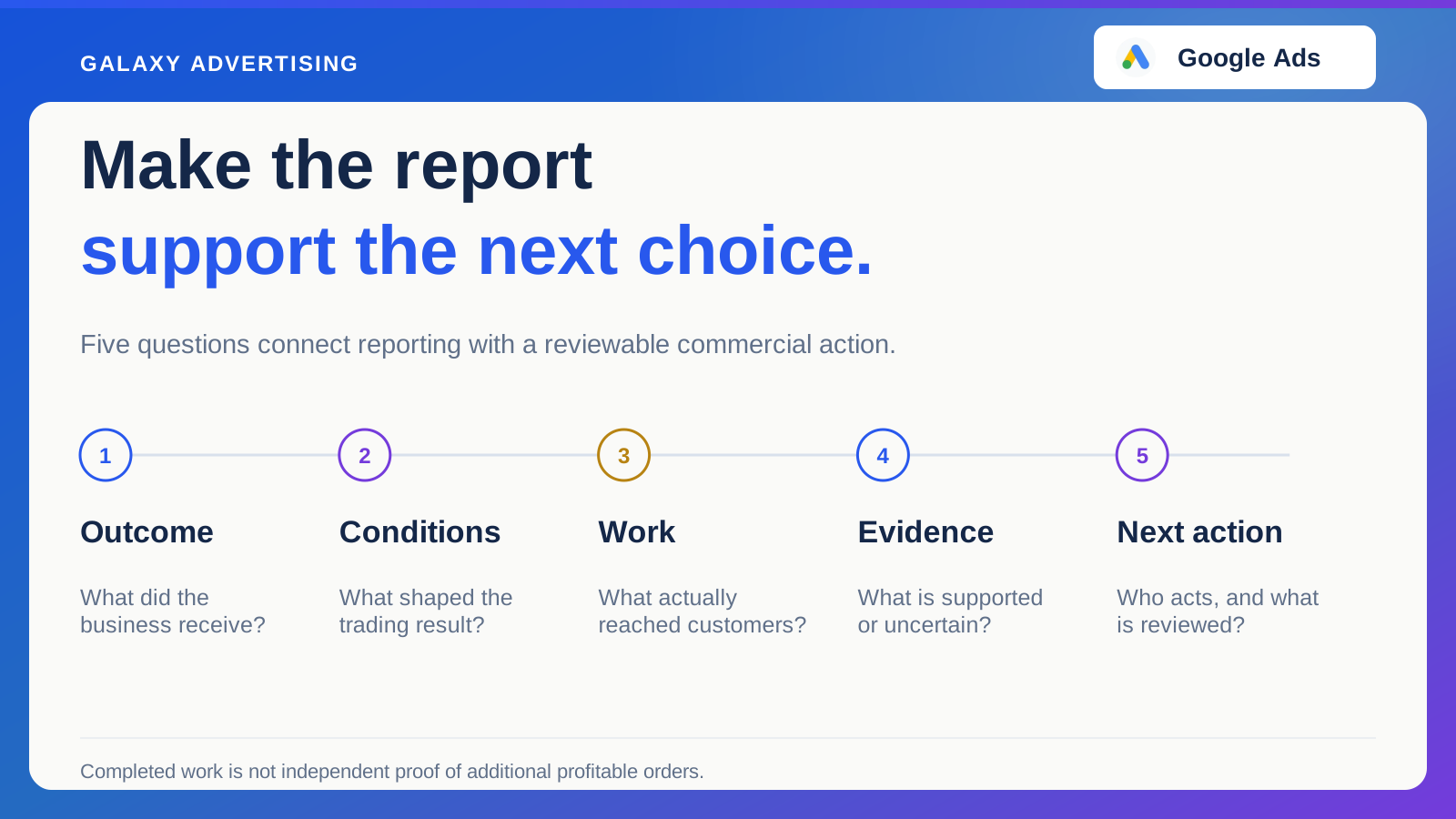
Write a reconciliation note stating what matched, which differences were explained, faults found and unresolved issues. Include agreed definitions and the next action for each open question.
Give the business a consistent commercial reference while keeping useful detail from other sources. Actual store orders matter. Advertising attribution still answers a narrower question about recorded connections.
A useful reconciliation makes the disagreement specific enough to act on. A dashboard with matching totals is only reassuring when somebody can explain what those totals mean and why they belong together.