Which appliance is right for the household when one has a larger stated capacity and another has different programmes? A comparison table can show both differences while both product pages claim to offer the ideal solution. Your customer still has a decision to make.
More numbers will not necessarily help. A useful comparison explains the scope of the facts and the questions they can answer. It uses authoritative references and keeps relevant conditions intact, rather than letting the highest number or longest feature list stand in for suitability.
Choose alternatives people actually consider
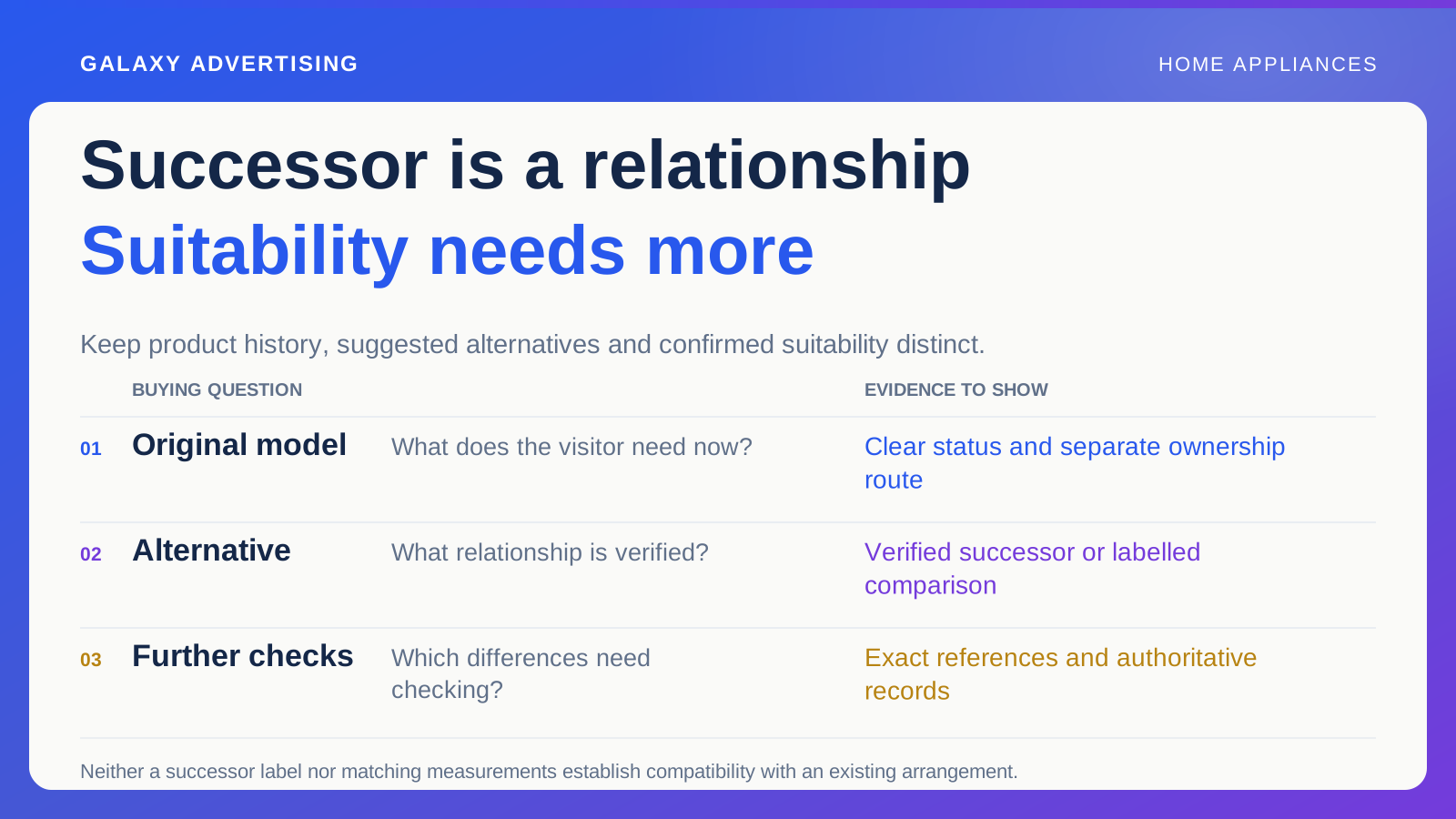
Use enquiries and your available range to identify models shoppers genuinely compare. Similar prices or photographs do not necessarily make equivalent alternatives. Installation category or intended role might differ in ways your guide needs to acknowledge.
Give the page a manageable purpose. Perhaps it explains distinctions within a model family, or documented features customers repeatedly ask about. That is a clearer job than trying to choose an appliance for everyone.
Keep it separate from technical assessment of an individual property. You can organise facts and direct unresolved questions to authoritative records or an appropriately qualified person. The comparison should support that further verification where needed, without implying that a page can replace it.
Build the table from sources you can check
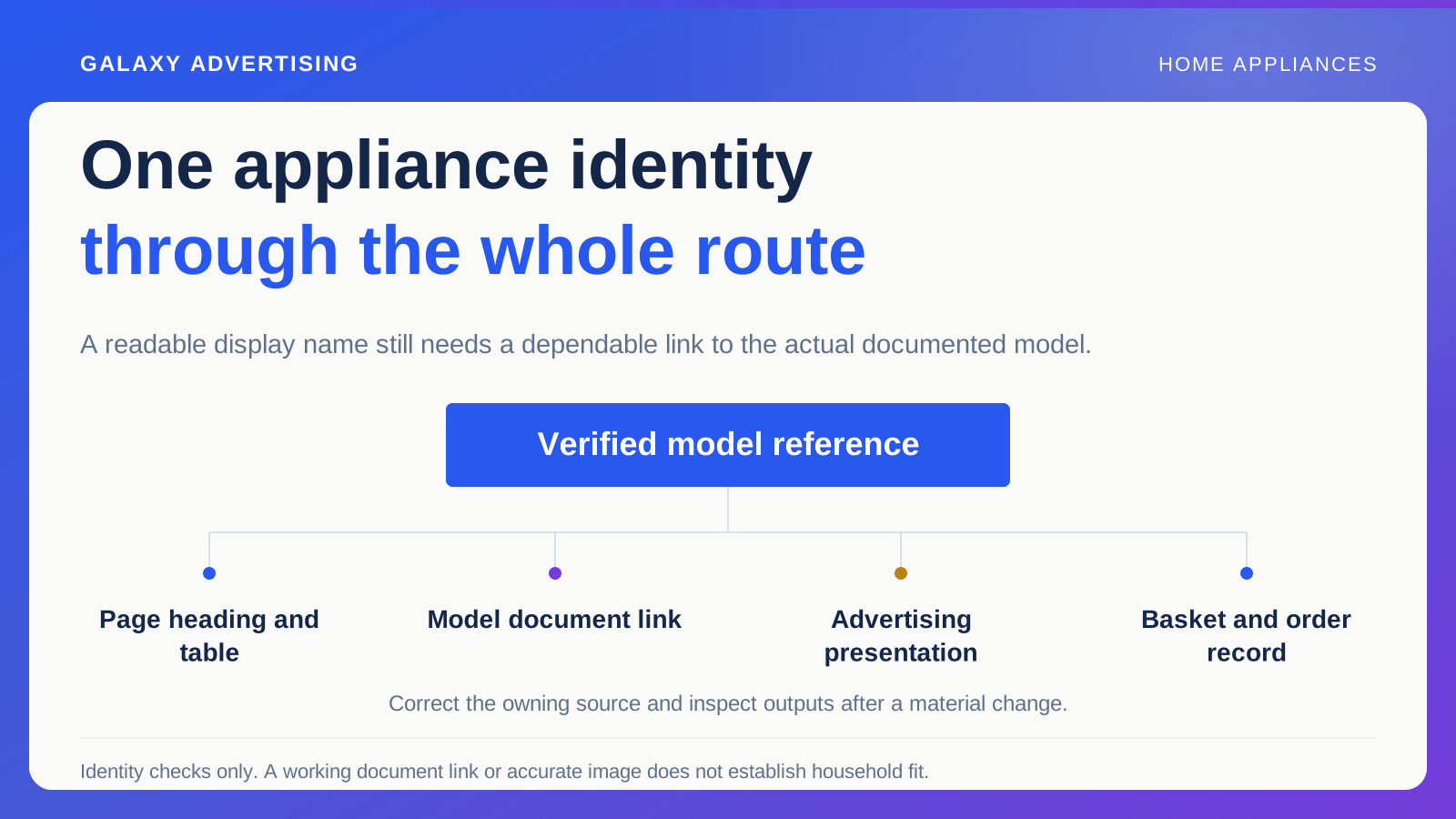
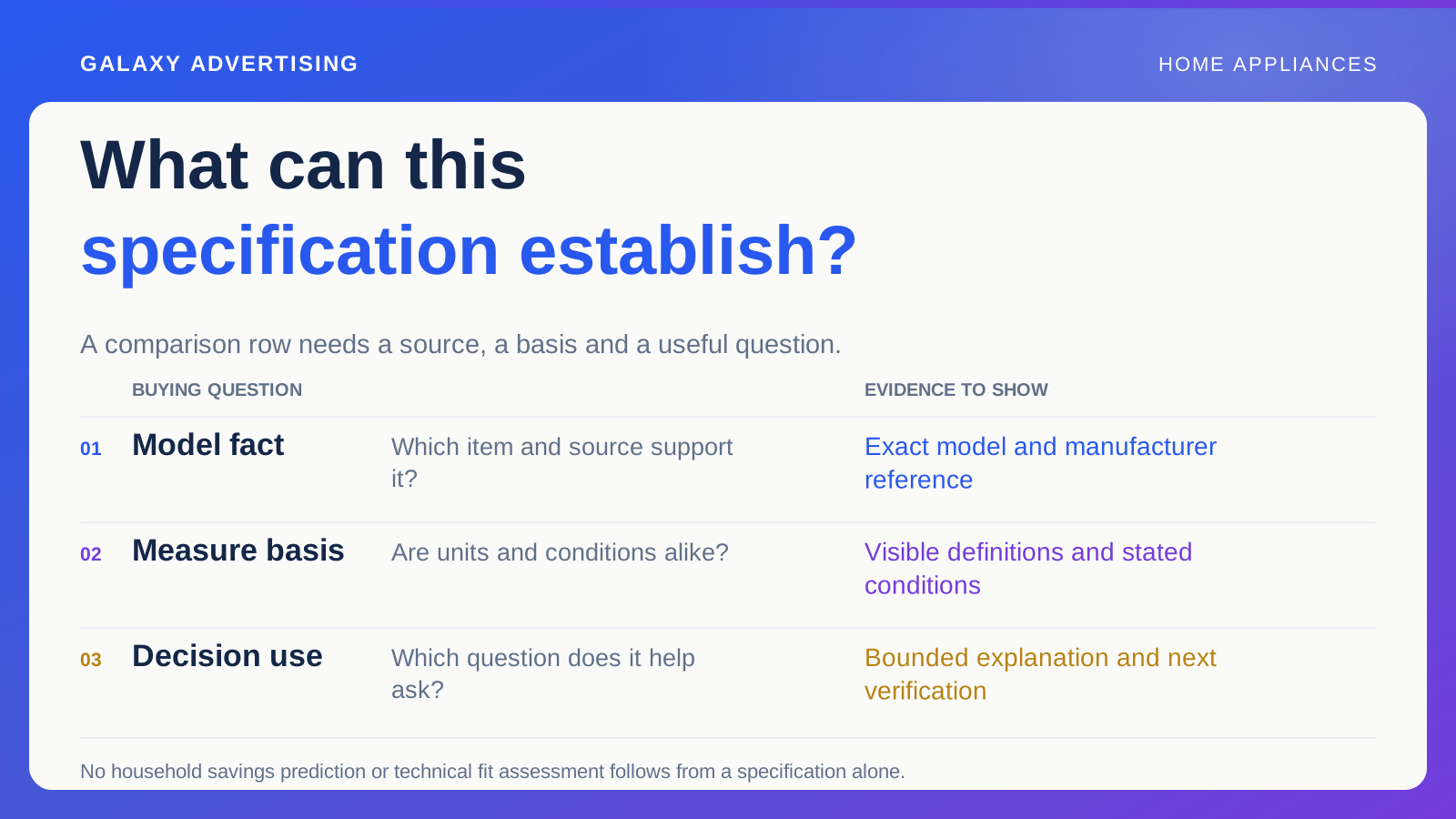
Use exact identifiers and current manufacturer information. Record the source for each material attribute. If descriptions conflict, resolve them before publication rather than giving uncertainty a neat table layout.
Keep definitions and units visible. A number without its basis invites the wrong interpretation, particularly when sources describe different conditions or measures. Two values sharing a row does not make them equivalent.
Be careful with missing information. An incomplete retailer page is not proof that a competing model lacks a feature. You may need confirmation. Reliable distinctions matter more than filling every cell, so leave yourself a route to establish the fact rather than turning an omission into an advantage for your preferred model.
Turn features into questions with limits
Explain what a documented feature helps someone investigate. Stated capacity can help frame a household requirement. On its own, it cannot determine the right model for every pattern of use.
Use ordinary language while retaining qualifications that affect meaning. Shorter wording is only useful if the source's meaning survives. Where a feature needs more context to be explained responsibly, provide it or link clearly to authoritative information.
Keep illustrations distinct from recommendations. A hypothetical household can show the kind of question to ask. It does not prove that everybody in similar circumstances should buy the same appliance. The example earns its space by clarifying the decision process, rather than dressing up as personalised technical advice.
Treat running cost claims carefully
A consumption figure needs its stated source and conditions. Do not turn it into a promise about household savings using unchecked assumptions about tariffs, frequency of use or the appliance being replaced.
If you use an illustrative calculation, label every assumption and distinguish it from a prediction of the customer's bill. Correct arithmetic does not make the personal conclusion certain. The calculation and the claim need separate scrutiny.
A dramatic savings headline cannot repair a weak explanation. Customers need to know which model is compared, what the evidence measures and where the calculation stops. A reference with clear boundaries gives them something more useful than apparent precision built out of guesses.
Show the retail offer separately
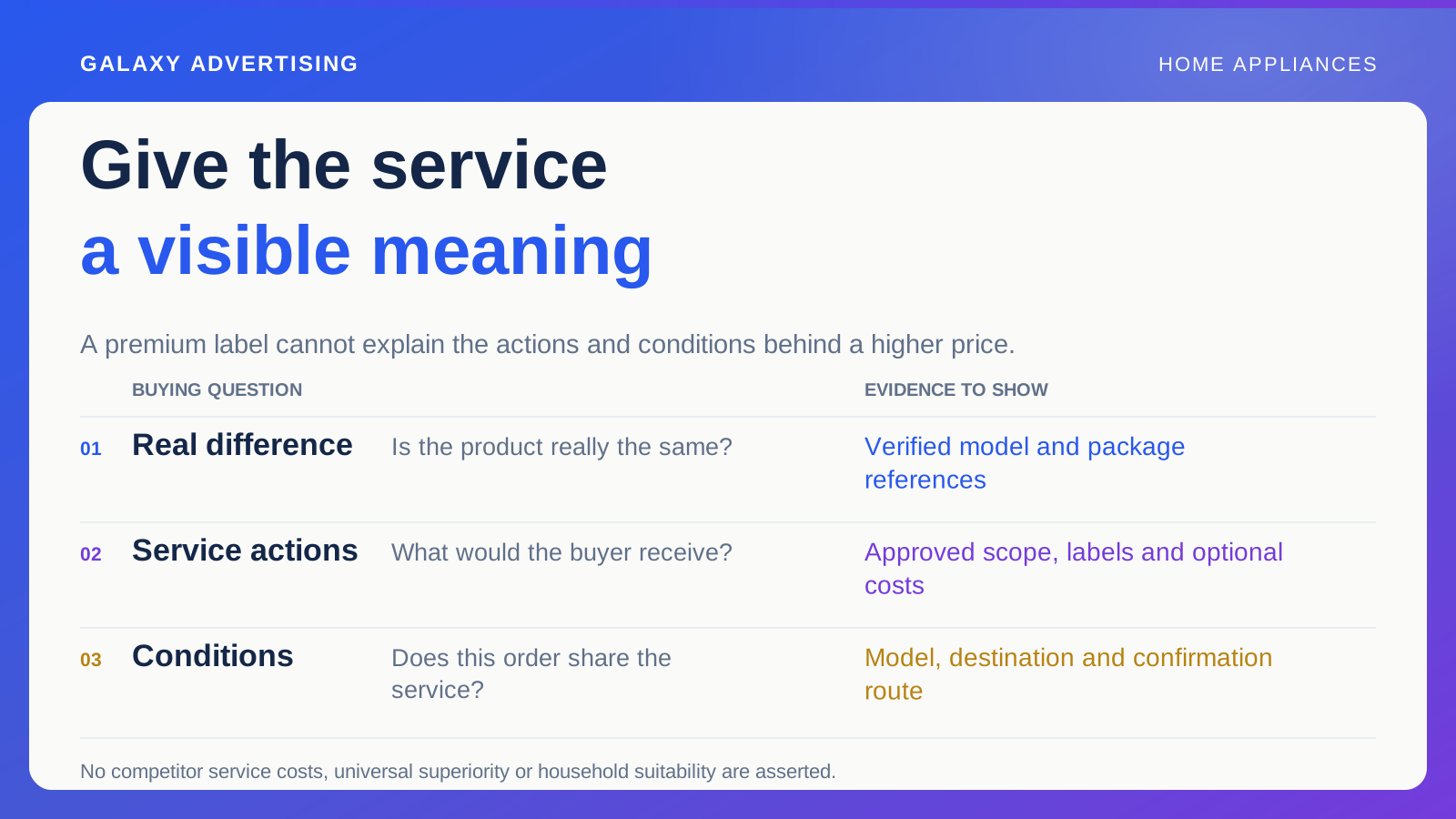
Set out delivery and optional services alongside the product comparison, with their scope and relevant conditions visible. A different retail package can change the payable offer without changing the appliance itself.
Do not let a service advantage become an invented product advantage. For identical models, explain the actual retailer difference. Equally, an attractive service package does not remove the need to understand a genuine difference between models. Both parts of the decision deserve their own explanation.
Use a consistent price basis for numerical comparisons. Temporary promotions, optional extras and arrangements that depend on location need to remain in the explanation. A cleaner chart is little comfort if it compares amounts that describe different offers.
Make the next check easy to follow
Link exact product pages and relevant manufacturer records with descriptive labels. Someone should be able to move from a table entry to the source for their next question without having to search your website again.
Follow each link and check model identity and document scope. A successful download does not establish that the document describes the item in your table. Put the reference in the maintenance record so a future update does not quietly break that connection.
Inspect the table on a phone. Headings and values must stay clearly associated on the narrower layout. A technically responsive page can still leave a shopper unsure which appliance an attribute belongs to.
Before release, give a colleague one row. Ask them to identify its source, unit and model scope, then explain which buying question it helps investigate. If their answer requires an unexplained assumption, improve the explanation rather than adding a winning badge.
The exercise may reveal a feature that is technically different but irrelevant to the page's purpose. Removing that row can make room for a distinction somebody can actually use. The point is to help the decision, not make the table as large as possible.
Maintain the differences as the range changes
Assign responsibility for model, document and service offer changes. The comparison can become inaccurate while individual product pages still work perfectly well. Preserve the source behind important entries so the owner has something to check.
Use repeated questions to refine the explanation. Remember that a handful of enquiries cannot reveal every reader's reasoning. Address the specific ambiguity you have found rather than automatically adding more promotional copy.
A useful comparison makes alternatives easier to inspect and keeps technical questions distinct from retail ones. It helps a customer understand a documented difference and seek further verification where appropriate. Success is an informed decision, even when the household's requirements mean your favoured model does not win every row.