In the proposed video, the replacement appliance arrives, slides neatly into its space and starts working. It looks wonderfully reassuring on the storyboard. But has the scene just promised a complete service, or technical suitability, that your actual offer does not establish?
A simple looking sequence can carry a complicated implication. Start the brief with the customer's question and the evidence you can responsibly show. Explain a documented feature, identify the model or clarify your service. Keep the conditions the customer still needs to check in the picture.
Give the asset one clear job
Decide which principal decision this piece of creative should support. Identifying the control layout, explaining documented capacity on its stated basis and showing a particular delivery service are different jobs. They need different references and footage.
One short asset cannot comfortably explain every feature and stage of ownership. A crowded montage may look comprehensive while leaving each important point too vague for somebody to assess.
Write an observable task for the producer. What should the viewer see or understand, and which facts support that understanding? Make the appliance look effortless describes an ambition. It does not provide enough evidence for the team to know which version of effortless they can honestly show.
Put the right references in the brief
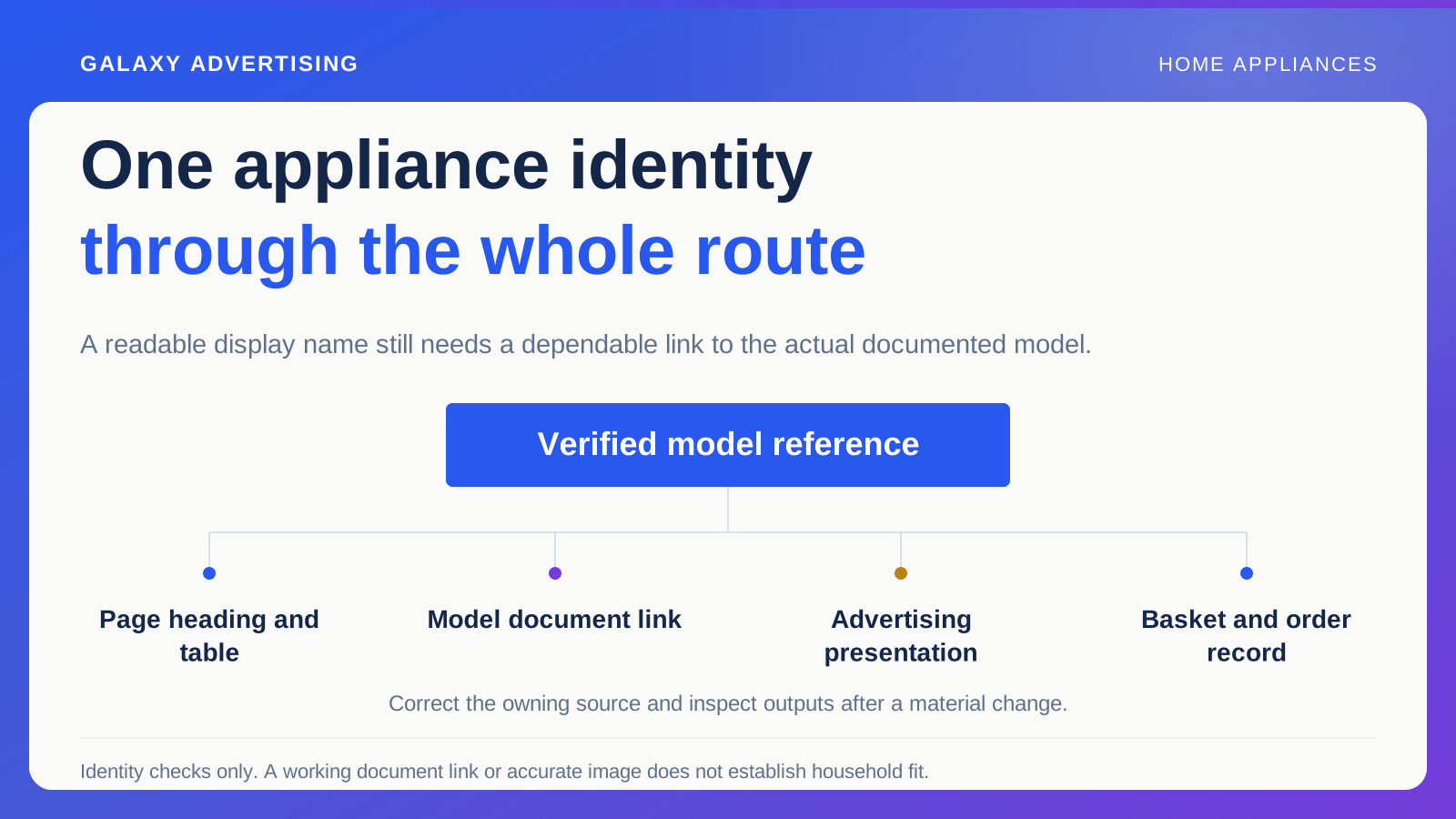
Supply the current model identifier, approved images and relevant manufacturer information. Where the asset concerns delivery or another commercial arrangement, provide your retail service description separately. That distinction needs to survive production.
Identify included components and optional extras. Accessories or additional assistance visible in a scene can suggest a package even when the script says nothing about them. Silence does not stop the picture communicating.
Use a small, organised reference pack instead of an unlabelled collection of similar product files. Creator and reviewer should share the same factual source. It makes disagreements easier to resolve and helps prevent a handsome picture of the wrong model becoming the campaign's reference by accident.
Show evidence that supports this claim
A clear view of a documented control or storage arrangement can support an explanation of that feature. It cannot establish suitability for every household or verify a broader performance promise. Keep the claim within what the view demonstrates.
Where technical information matters, use the authoritative model record and retain relevant conditions. A qualified manufacturer statement should not become an unconditional headline merely because the shorter version fits the frame.
Avoid demonstrations your retailer cannot verify safely or technically. Use approved references and appropriate specialist input in the production plan. An advertising asset should not turn into improvised instructions for installation, connection or operation beyond its verified scope. A clearer feature explanation does not require the production team to assume technical authority it does not have.
Watch the meaning of the whole scene
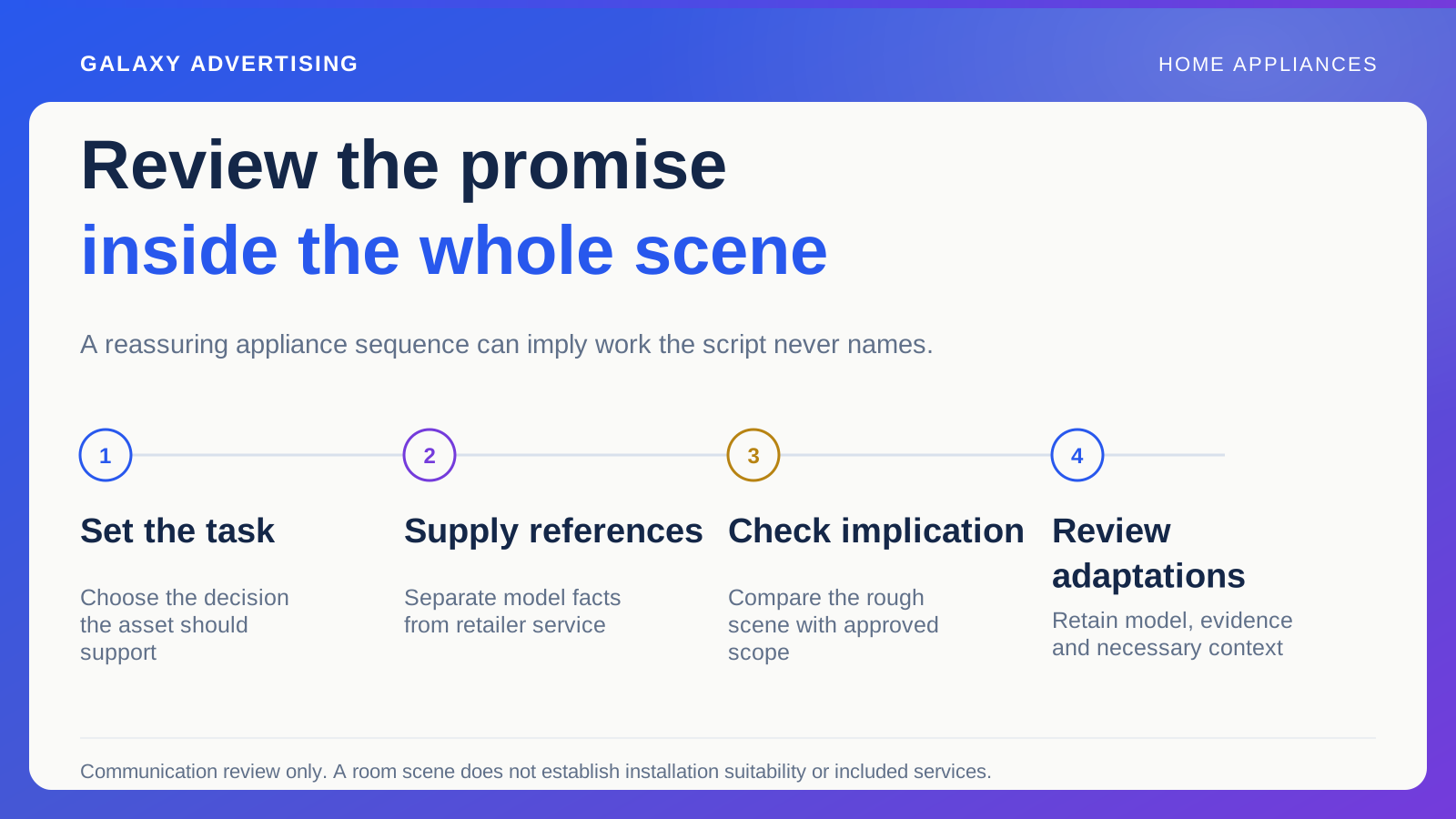
Review what someone could reasonably infer from the sequence. An appliance appearing instantly in a finished setting may imply included installation or an uncomplicated replacement. Check those implications against the offer, not just the wording beside them.
Separate an illustrative environment from a technical representation of fit. Showing appearance in context does not establish that a customer's own space meets the documented requirements.
Check edited or generated imagery against real references. Controls, proportions and components need to stay accurate. A convincing image is not evidence that the arrangement shown is technically appropriate. Include that boundary explicitly in the factual review rather than treating visual polish as approval.
Explain the service through real actions
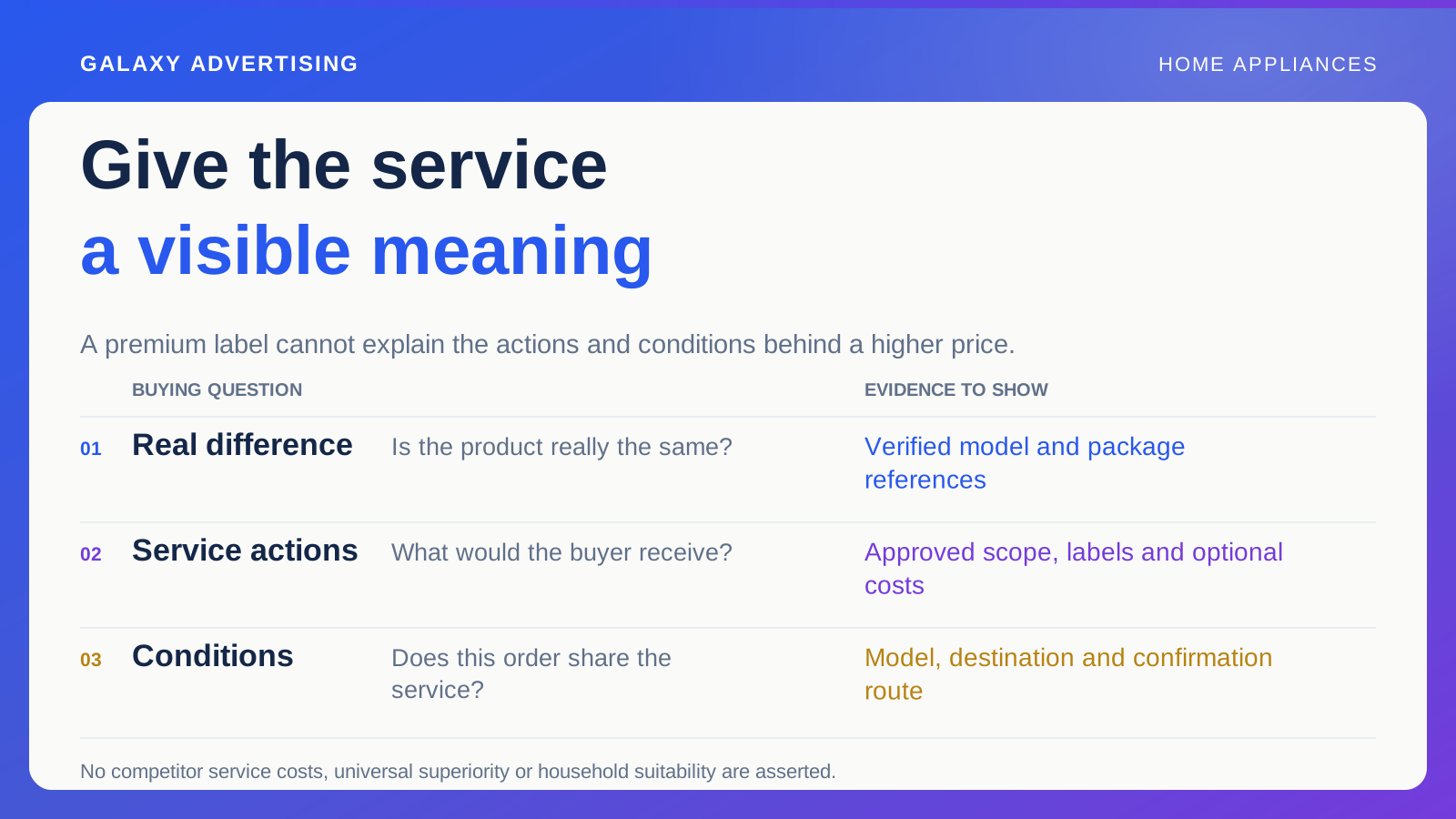
Where the asset concerns a retailer service, describe the included actions and the applicable route to further information. Hassle free ownership can suggest more than you intend to supply while saying very little precisely.
Keep delivery, unpacking, removal and optional installation distinct where the package requires it. Give the creator an approved account of the arrangement, rather than a broad request for a premium experience.
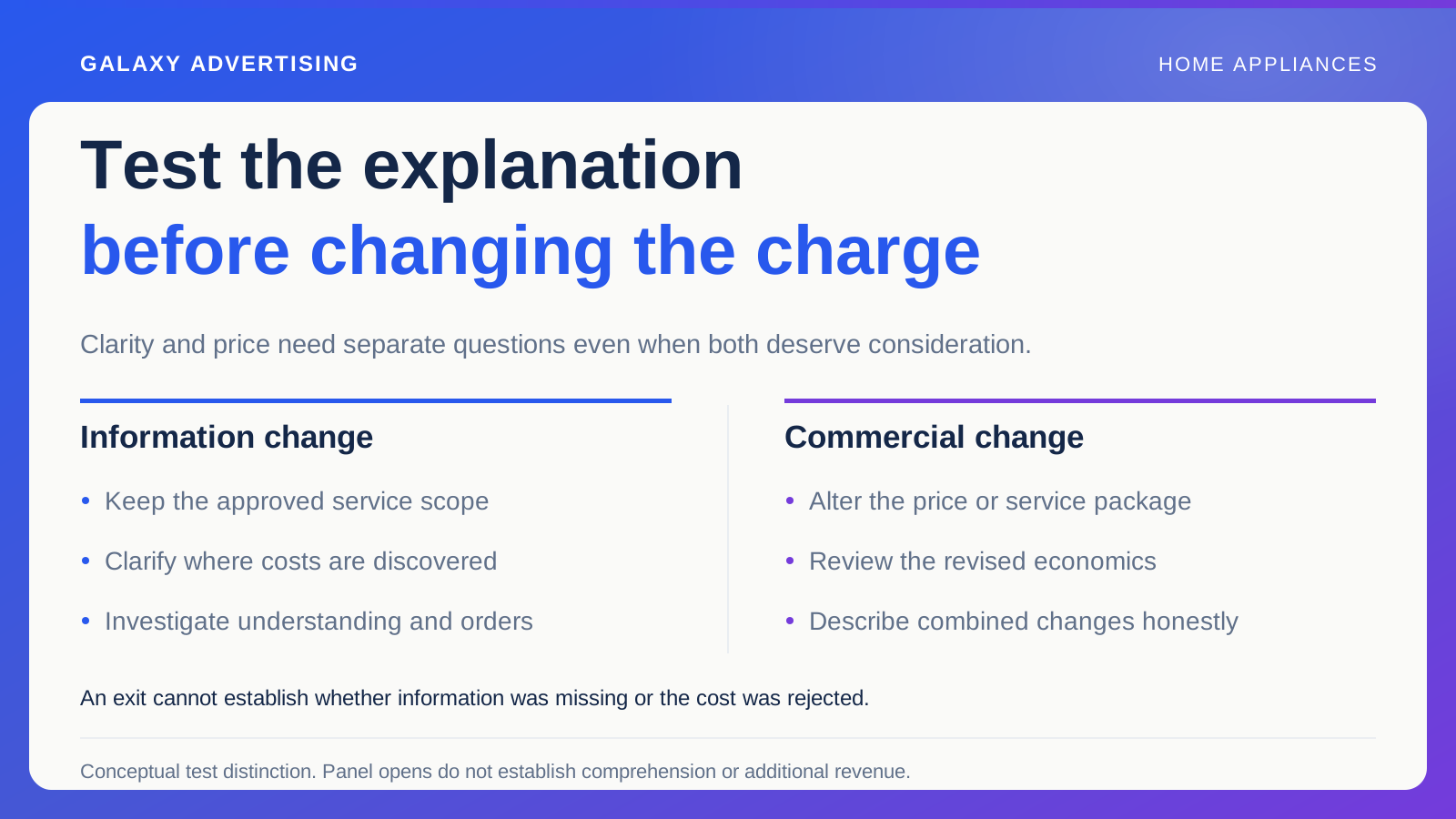
Plan for conditions that vary by order or location. The asset should help a customer understand how to verify their relevant offer. One campaign phrase cannot establish the same arrangement for every household, and the creative should not leave that impression.
Check each adaptation in its own right
Use the account team's actual plan to identify formats and verify current technical requirements where needed. Every adaptation must retain the model, evidence and necessary context.
A crop can remove a label or condition and change the message while everything left looks accurate. Inspect exports on a phone. Approval of the large production file does not answer whether the smaller version still communicates the same thing.
Keep essential text readable and focused. If avoiding a misleading impression requires dense qualifications, reconsider the proposition. A clearer scene or narrower claim may serve the customer better than an appliance covered in small print.
Take a hypothetical sequence about optional removal. Before filming, ask the operations owner what it covers and which conditions customers must check. The producer can illustrate that accurately without suggesting other actions are included.
Ask an unfamiliar reviewer to describe the package they understood from the rough cut. If they describe more than the approved service, change the scene or proposition before finishing adaptations. This tests communication, rather than instructing anyone how to perform the service. Its value is catching the wrong expectation while a correction is still practical.
Give reviewers time to fix the evidence
Assign product accuracy, service review and final release authority before production. Different people may own those decisions, but the creator needs a workable route for resolving their comments.
Review a rough sequence before decorative finishing. Finding an unoffered service implied by the main scene after every adaptation is finished makes a small planning gap costlier to repair.
Retain the approved asset, caption and destination with supporting references. The next editor needs to know which model and promise the file describes. A useful creative library preserves that reasoning. It lets future work move efficiently while keeping the promise within the evidence that made it possible.